Custom Men’s Jewelry Manufacturer for Brands
HaoLustra is a Qingdao, China-based jewelry manufacturer supporting brands and sourcing teams with OEM/ODM development, sampling and private-label production for men’s jewelry projects.

For brands seeking a men’s jewelry manufacturer, the first decision is how to turn a men’s product concept into an assortment that can be sampled, sized and reordered—not simply which finished designs appear in a wholesale catalog. A successful men’s jewelry collection needs more than a few bold rings and chains. HaoLustra is a Qingdao, China-based jewelry manufacturer supporting brands, boutiques, wholesalers and sourcing teams with OEM/ODM development, design review, sampling, quality planning and private-label production. For an OEM men’s jewelry project, we help buyers translate a proposed men’s collection into decisions about proportions, wearer fit, closures, material direction, branding and individual SKUs before bulk quantities are confirmed. For private label men’s jewelry, we can also review artwork and packaging requirements against the product brief. Exact materials, processes, order minima and sampling terms are assessed for each project.
Whether you are launching a small range or extending an established jewelry label, send your sketches, reference images or existing samples with the styles you want to develop. We will review the scope and identify the specifications and project terms that need confirming.
1. Develop a Men’s Collection for a Defined Customer
Start with the buyer you want to serve, not with an assumption that all men prefer heavy chains, dark metals or oversized rings. A restrained everyday range may focus on slimmer links, comfortable cuffs and discreet marks. An expressive collection may explore sculptural forms, colored details, statement bands or layered pendants. Workwear-influenced and modern heritage collections can use entirely different design language.
Before choosing individual styles, define three things: your intended customer, the look and price position of the range, and the situations in which it will be worn. These decisions guide later conversations about dimensions, finish, weight and quantity. They also help a brand distinguish a consistent collection from a collection of unrelated catalog pieces.
A practical assortment decision is to separate core styles, statement styles and test styles. Core pieces might share an everyday finish and consistent hardware language; statement pieces can explore bolder shapes; test pieces can be sampled before a buyer commits to a wider size or color range. This is a suggested planning method, not an inventory or production guarantee.
For the first development discussion, one mood board plus three to five reference styles may be more useful than a long unstructured wish list. Reference images establish a design direction; they do not constitute approval to reproduce another brand’s protected design.
2. Select the Product Families That Belong Together
A men’s range can be built across several product families without treating every item as interchangeable:
- Rings and bands: consider silhouette, width, profile, decoration and a realistic size mix. More detailed ring size and setting decisions belong on our custom ring manufacturing page.
- Necklaces and chains: think about link scale, finished length and the balance between the chain and any pendant.
- Bracelets and cuffs: establish wrist fit, fastener position, usable length and the feel of the piece during movement.
- Pendants and tags: review scale, attachment, motif and how the pendant sits on the proposed chain.
- Cufflinks and pins: where relevant to the brand, treat back fitting, paired presentation and logo readability as separate product decisions. See custom cufflink manufacturing.
A brand selecting a manufacturer’s services should also distinguish make-to-spec development from ready-stock men’s jewelry wholesale. If your design, dimensions, surface treatment, logo or component configuration differs from stock, clarify which changes require a new sample or tooling review before assuming the catalog item can simply be relabeled.
A brand does not have to launch all these categories. A focused assortment of well-related products may be easier to brief, sample and reorder than a broad range with too many unrelated designs. Each proposed item is reviewed for material and production feasibility before a specific manufacturing commitment is made.
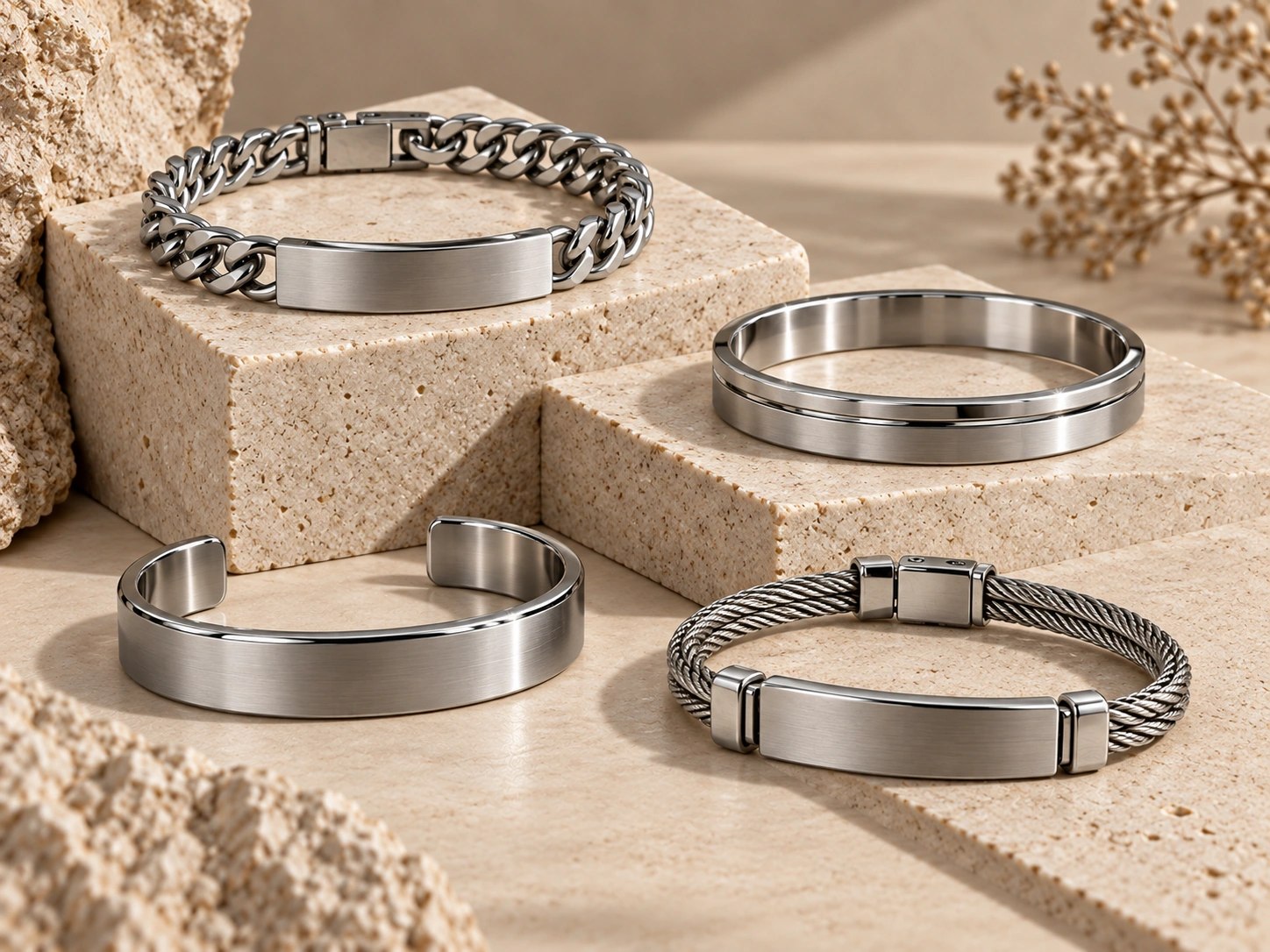
3. Specify Visual Weight, Dimensions and Proportion
Two designs can look similar in a photograph and feel very different when worn. For men’s jewelry, the visible width of a chain, the thickness and edge profile of a band, and the proportions of a pendant can influence both the appearance and comfort of a collection.
Record the dimensions that matter to the buyer instead of using words such as “chunky” or “lightweight” on their own. For a necklace, that may include link width, target length and pendant size. For a bracelet, usable length, width and closure. For a ring, band width, profile and intended size range. If target weights are part of the brand’s product promise, specify them for review rather than assuming one weight suits every material and size.
Use a small proportion brief for each hero product: intended width and length, visual profile, an acceptable weight direction rather than an invented number, any edge or contact-surface requirement, and the photograph or drawing that defines the intended look. For a coordinated men’s range, record which visual cues should repeat across pieces and which measurements must remain product-specific.
The goal is not to claim an unsupported universal tolerance. It is to reach a shared specification that can be checked on a physical sample before quantities are confirmed.
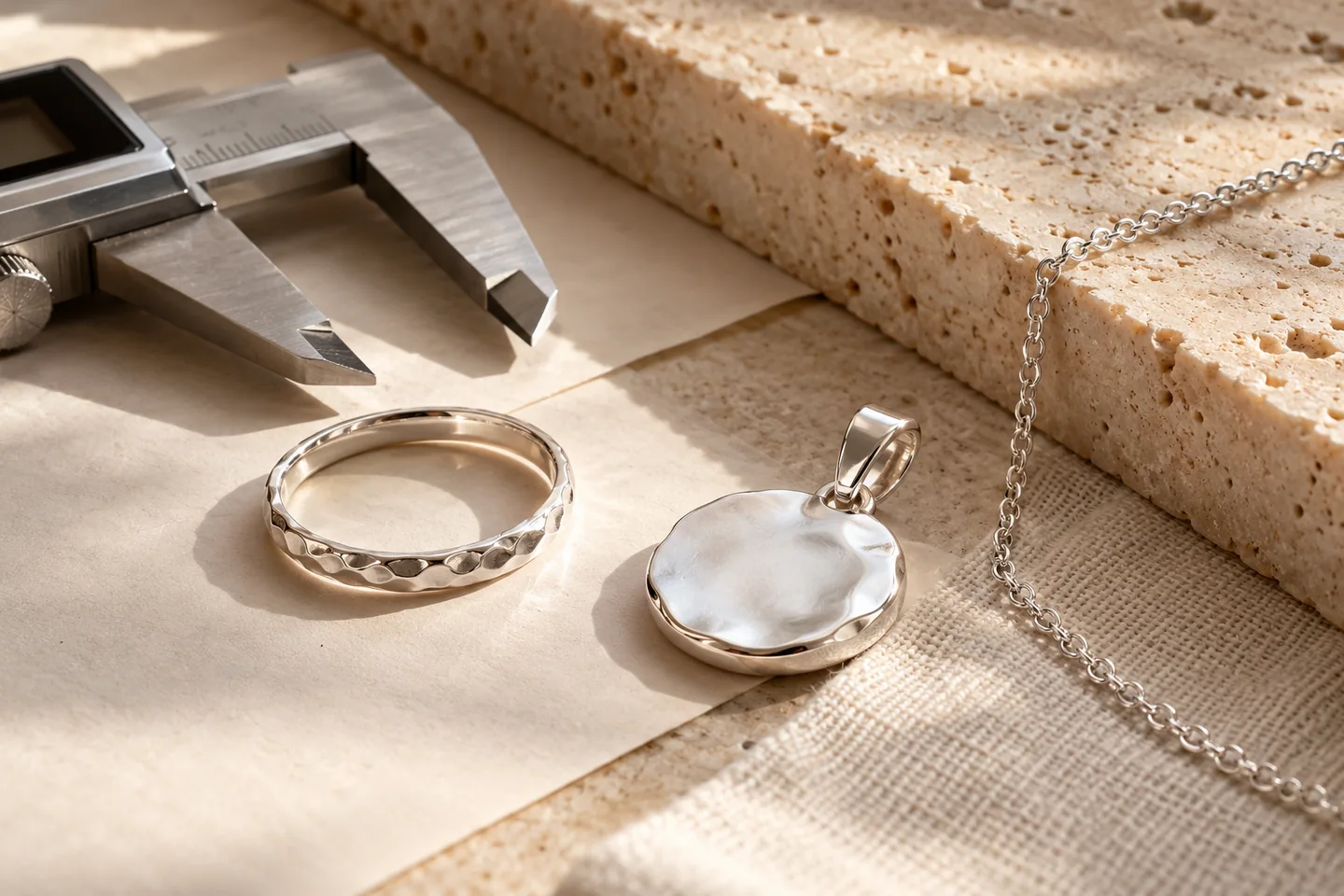
4. Plan the Size Mix Before Setting Bulk Quantities
A men’s collection needs a size and length plan across product families. One photographic sample size does not tell a brand which ring sizes, wearable bracelet lengths or necklace lengths its customers actually need. Define the initial size offer from your intended market and available customer evidence; do not assume one universal men’s fit.
For the first range review, send a short assortment matrix:
| Product family | Variant decision | Buyer information to confirm |
|---|---|---|
| Band ring | Size system and proposed size mix | Sizes and planned quantities by size |
| Chain bracelet | Usable length and fit preference | Wrist-fit target, finished length and clasp allowance |
| Necklace / pendant | Chain lengths and pendant pairing | Length options, pendant scale and quantity by combination |
This is a collection-level variant plan, not a replacement for the detailed ring sizing review or bracelet construction review. A brand might launch one ring, one bracelet and one pendant with several options, but those options must not be combined into a single undifferentiated order quantity. For feasibility and MOQ, HaoLustra reviews the proposed counts by style, length, size, finish and components as applicable; the general low-MOQ guide owns the wider MOQ explanation.
Buyer decision: identify which combinations should be sampled for actual wear, and which less-certain variants should remain candidates until their demand and production feasibility are clearer.
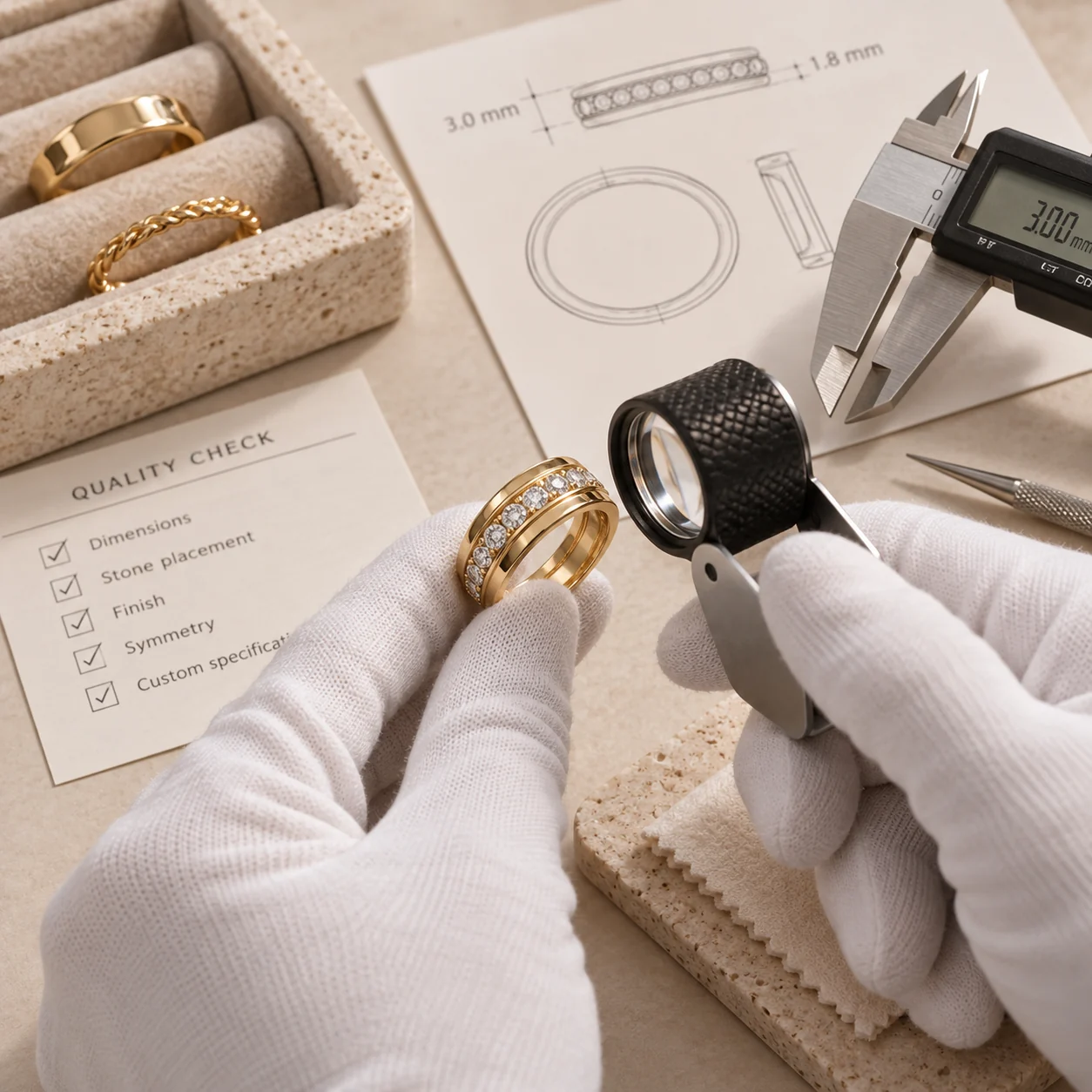
5. Compare Material and Finish Directions by Design
There is no single “best metal for men’s jewelry.” Materials should be selected against design, intended wear, target price and finish requirements. Stainless steel, brass and sterling silver represent different project directions; the exact grade, alloy, construction, plating and component availability must be confirmed for each design.
For brands comparing material options, start by distinguishing the base metal from the surface appearance. A silver-colored item need not be 925 sterling silver; a gold-tone finish does not establish a particular gold content; and a stainless-steel style should not be assumed to meet a specific grade or skin-contact requirement without a defined specification. State the desired base material and any evidence requirements separately from color and styling.
A polished band, a softly brushed chain and an antique-inspired pendant may work together visually, but they are not automatically identical in surface behavior or maintenance needs. Ask for finish references under consistent lighting and record which parts must match across SKUs. Dark-toned or gold-toned finishes should be discussed in terms of the actual material and treatment, not promised as permanently scratch-proof or never fading.
For base-metal and material-specific guidance, see custom stainless steel jewelry manufacturing and custom brass jewelry manufacturing. The developing sterling silver page is not linked here until it is verified live.
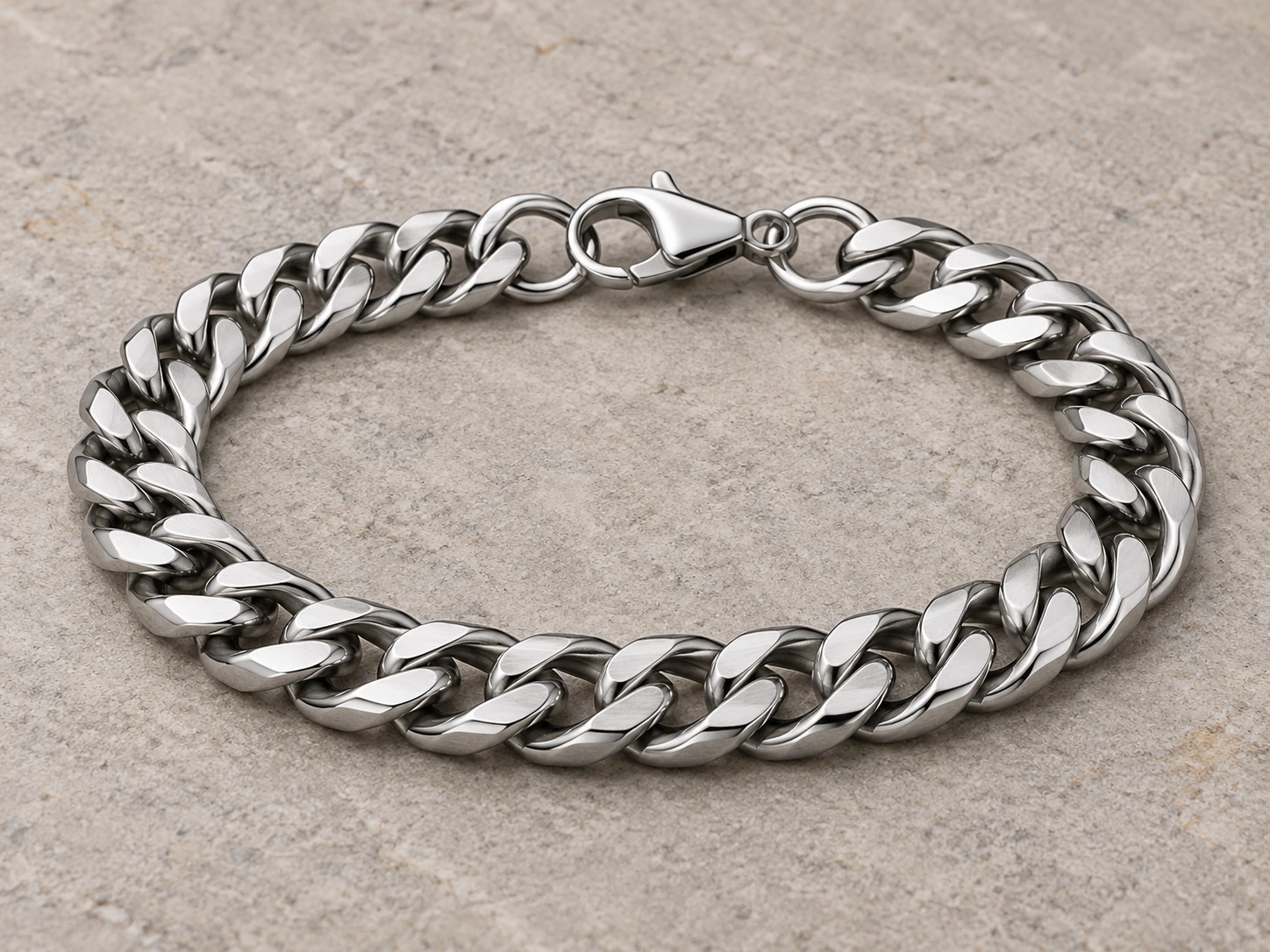
6. Check Closures and Everyday Wearability
A convincing men’s chain or bracelet needs more than an attractive link. How a clasp opens, closes and feels against the wrist can affect whether the finished piece meets the buyer’s expectations. The same applies to edges that sit against the skin, pendant bails that move across a chain, and ring profiles that contact adjacent fingers.
Buyer and wearer discussions raise several useful sample-use scenarios, not universal performance findings: a larger wrist may exceed a default bracelet size; smaller hands may make a very wide ring feel visually overpowering; thick beads or bracelets may interfere with desk work; and exposed links or hardware can catch arm hair. Treat these as optional, relevant wear checks for your target audience—not as claims that every men’s customer has the same fit or style preference.
At the sample stage, review the components included in the approved design: closure operation, link movement, connection points, edge feel and how the item sits during ordinary motion. A wide or heavily textured bracelet, for example, can feel different at a desk than it does during a brief fitting. These are recommended acceptance checks, not claims that an untested project has already passed a durability standard.
If a design uses a specialized clasp, hinge or mixed-material connection, identify that requirement before quotation so feasibility, sampling and any external sourcing can be discussed explicitly.

Develop a Wear-Tested Sample Brief
Share the styles and wearer-fit questions you need to resolve before a proposed bulk order. Sampling scope and production feasibility are reviewed per project.
7. Approve a Men’s Jewelry Sample Against a Wearer-Focused Checklist
A photo confirms the proposed look, but a men’s wearer-fit sample review should expose issues that change by product family. Rather than copy a general factory inspection checklist, assign one practical wearing scenario to each design in the proposed collection:
| Sample type | Men-focused review question | Record for the buyer’s approval |
|---|---|---|
| Ring or band | Does the profile and width feel acceptable on the intended finger sizes? | Approved width/profile, relevant size references and revision |
| Bracelet or cuff | Does it sit and fasten comfortably at the proposed usable lengths? | Fit notes, clasp reference, length mix and revision |
| Pendant and chain | Does the pendant sit correctly and move as intended on the selected chain? | Pendant-to-chain pairing, length, bail clearance and revision |
| Cufflinks or pin, if included | Does the item read well at actual apparel scale? | Pair orientation or placement, logo legibility and revision |
Use customer or wearer feedback where available, and distinguish a recommended fit review from any contracted mechanical, durability or material test. Approval of one style or finish does not approve all other variants. Keep the sample reference and a brief list of agreed changes so later production discussions refer to the correct version.
For the general sequence of sample types, costs and approval stages, see HaoLustra’s sample guide. The men’s page owns cross-category wearer acceptance, not the site’s universal sampling procedure.
8. Keep Men’s Fit Variants Traceable Across a Collection
A men’s collection may carry the same brand signature across a signet ring, chain bracelet and tag pendant, but the wearer-fit variants are not interchangeable. A shared finish or motif can link the products visually; a ring size is not a bracelet length, and a necklace-and-pendant pairing can change its actual wearing position.
For supplier handoff, keep a short men’s fit-variant register alongside the design references:
| Men’s collection item | Wearer-specific variant to record | Physical sample acceptance question | Repeat-order change to flag |
|---|---|---|---|
| Band or signet ring | Size system and size allocation | Does width, edge profile and finish work on the chosen reference sizes? | Changed size mix, profile or engraving position |
| Chain bracelet | Usable wrist length, closure allowance, link width | Can the intended wearer fasten it and move comfortably at the desk? | Changed length mix, clasp, link or finish |
| Chain with tag pendant | Chain length, pendant scale and bail pairing | Does the pendant hang and move as intended with the selected chain? | Changed chain length, bail or pendant weight direction |
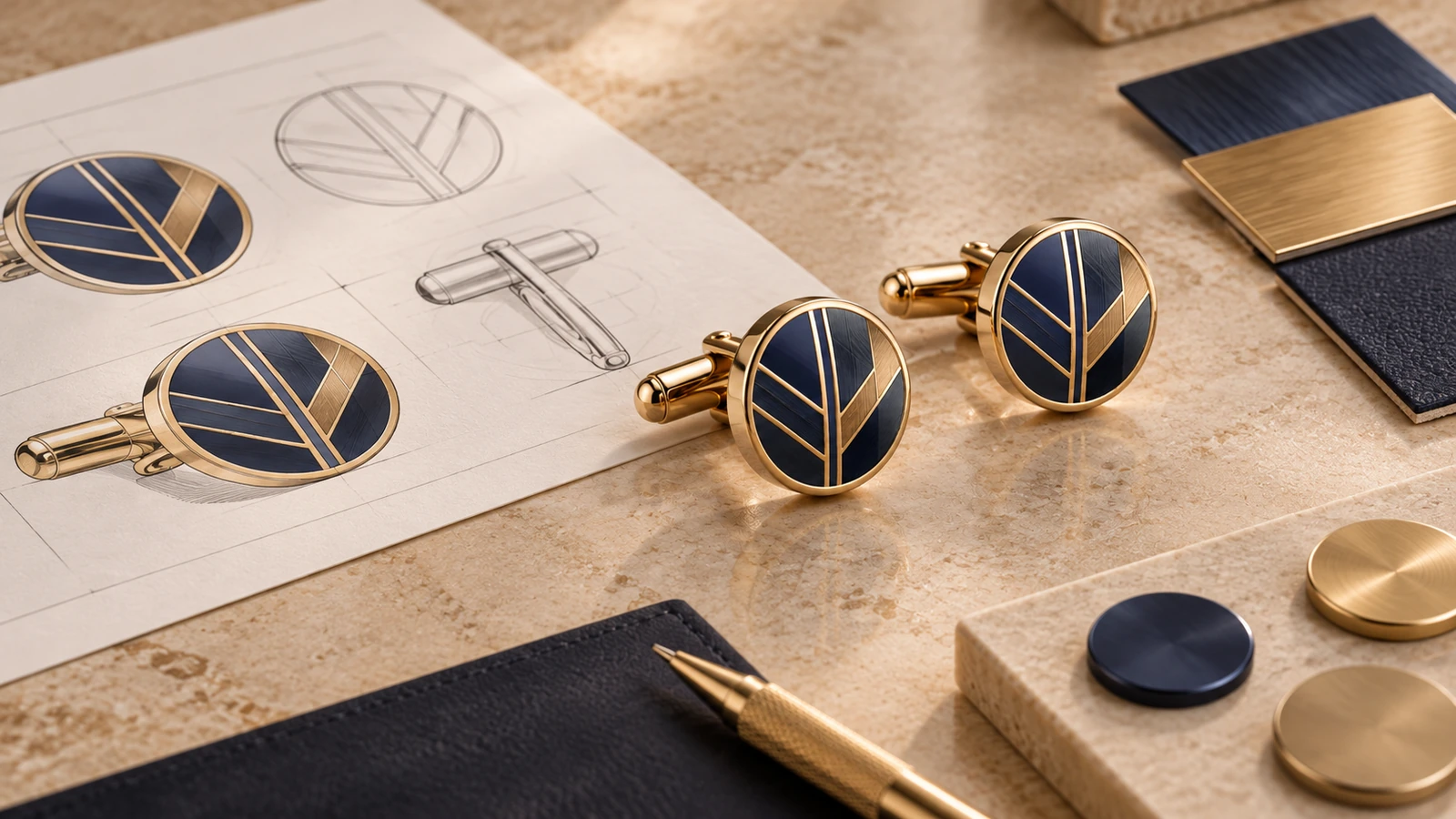
| Cufflinks or lapel accessory | Pair orientation, face dimensions and garment fit | Is the mark recognizable at actual apparel scale? | Changed reverse fitting, face size or logo position |
These are proposed acceptance checks, not laboratory test results or a claim that HaoLustra has already manufactured any pictured example. For every item, record the approved design version, sample reference, actual material/finish specification, proposed quantities by variant, and the buyer’s sign-off date. This separates a revised size allocation from a new design that may need its own feasibility and sample review.
Collection coordination is not the same as a matching jewelry set. A men’s capsule collection can share a design direction while its items are sold as separate SKUs. If products must be packed and priced as a complete multi-piece set, follow our dedicated custom jewelry set manufacturing page for complete-set units, component quotation and set-level approval. For general multi-SKU OEM procurement, see the custom jewelry manufacturer page.
9. Place Brand Details at a Legible Men’s Jewelry Scale
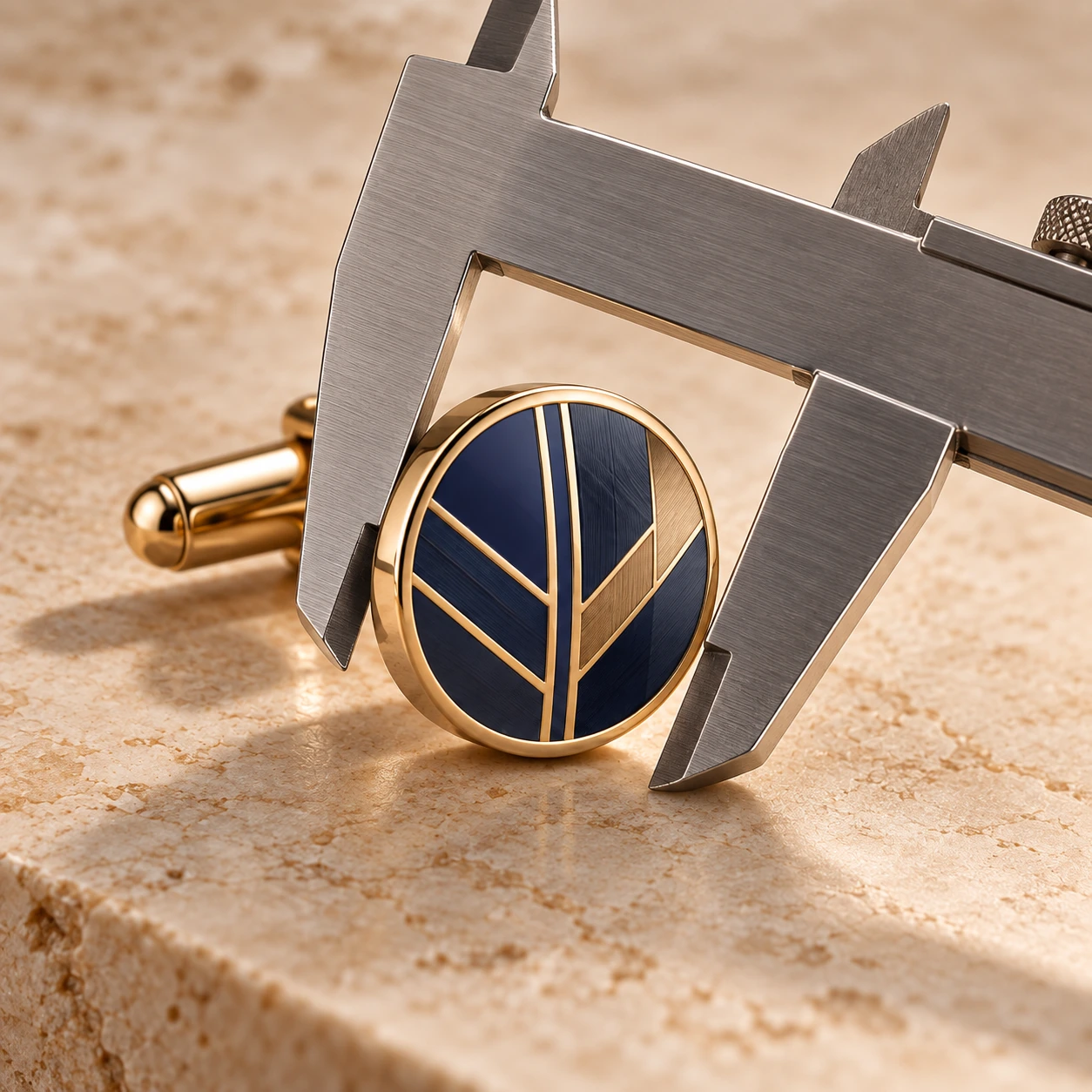
For private-label men’s jewelry, logo size and placement should be approved on the physical product—not only on a large artwork preview. A narrow inside-band mark, a pendant tag, a chain-end plate and a garment-accessory face each have different usable space. Small text or intricate linework may need simplification to remain recognizable.
Send the original logo artwork, the desired location and a photograph showing the product at actual scale. Ask which methods are practical for the selected structure and finish; a general branding service does not guarantee every engraving or raised-mark method for every component.
Presentation can be coordinated with the project, but the full range of boxes, inserts, quantity requirements and packaging quotations belongs on custom jewelry packaging and the private-label manufacturing service page.
10. What to Send for a Men’s Jewelry Manufacturing Quote
HaoLustra can start reviewing a project from sketches, reference photographs, existing samples or design files. A general statement such as “we need 300 pieces of men’s jewelry” is less useful than a collection brief showing the proposed variants.
Share a mood board and a compact buyer specification for each style:
- Brand audience and collection direction: everyday minimalist, expressive, heritage-inspired or another clearly defined position.
- Product families and references: e.g., one band ring, one bracelet, one pendant, with drawings or photographs for each.
- Wearer-fit variants: ring sizes, usable bracelet lengths and chain-length or pendant pairings.
- Proportion and materials: width/length targets, metal and finish directions, comfort or visual references.
- Brand details: logo artwork, placement and any packaging direction requiring separate review.
- Commercial assumptions: approximate units by style and variant, launch market, sampling request and target window.
Illustrative first enquiry (not a real customer order): “We are planning a three-style men’s collection: a brushed band ring, a chain bracelet in two lengths and a tag pendant. Please review our ring-size mix, clasp direction and the approved finish reference, and tell us which variants need their own samples or production minima.” This gives the manufacturing team a clear starting point without claiming an automatic mixed-SKU MOQ.
Send what you have; HaoLustra can identify missing details and discuss applicable sampling, production and quotation terms after review. Exact costs, timelines, manufacturing processes and workable quantities depend on the agreed designs.
11. Custom Men’s Jewelry Manufacturing FAQs
Can you develop a men’s jewelry collection from reference photos?
A brand can begin with reference photos, sketches, design files or an existing sample. HaoLustra can review the direction of a men’s collection and identify what must be specified before development. Reference images are a starting point for design review, not a promise to reproduce another company’s protected design or to support every possible manufacturing technique.
Which sizes should a men’s ring and bracelet collection include?
Choose the range around the brand’s intended customers, size system and actual wearing preferences; there is no universal size mix that fits all men’s collections. Specify expected quantities by size and evaluate representative samples. For detailed ring size planning, use the dedicated ring manufacturer page rather than relying on a generic men’s size assumption.
How do I choose chain width and jewelry weight for men’s designs?
Start with the visual direction and intended wearing experience. Record the desired link width, chain length, pendant scale or band profile, and request sample review of the resulting proportions and weight. An impressive product photograph is not a substitute for confirming how a physical piece feels in use.
What should a brand approve before bulk production of men’s jewelry?
Approve the specifications that affect each SKU: design and dimensions, size or length variations, material and finish, closures or attachments, logo details and packaging, together with an agreed sample where applicable. Keep the approved version separate from later design revisions so the next order can refer to the correct reference.
Can rings, pendants and bracelets form one coordinated custom collection?
Yes, they can be planned as one visual collection with a shared motif, finish or brand direction. Each product nevertheless needs separate feasibility review and specifications. A coordinated look does not mean every item uses identical components, production methods or order minimums.
Can different men’s ring sizes and bracelet lengths share one minimum order?
Not automatically. A brand may present the variants in one men’s collection brief, but the supplier must review ring sizes, bracelet lengths and finishes against each product’s manufacturing requirements and proposed quantities. Send a size-and-length breakdown before assuming variants or categories can share a minimum; the general counting rules belong on our low-MOQ manufacturing page.
Can the pieces include our logo and private-label packaging?
Yes, logo and packaging requirements can be reviewed with the project. Confirm the logo at actual jewelry scale and share a packaging reference. Specific methods and formats are subject to feasibility and separate agreement; detailed options belong on our private-label and packaging pages.
How should a men’s brand record ring sizes and bracelet lengths for later reorders?
Keep a versioned line for each approved style and fit variant. Record ring-size system and quantity split, usable bracelet length and clasp allowance, finish reference, the approved physical sample, and any changed design detail. A later request can then distinguish more units in an already approved size from a new length, new finish or changed construction. Availability, quantity and technical feasibility are reviewed afresh for each reorder.
How should we assess clasp and closure comfort on a men’s bracelet?
Check the actual sample on the intended wrist fit: whether the clasp operates conveniently, whether the bracelet sits comfortably, whether edges feel smooth and whether the closure meets the visual brief. These are practical sample-approval points. Any required mechanical or durability test standard should be agreed and documented for the project rather than assumed.
What is the difference between custom men’s jewelry manufacturing and wholesale men’s jewelry?
Custom manufacturing starts with your own design or an agreed change to specifications such as size, chain length, components, finish or branding, followed by feasibility review and an agreed sample where needed. Ready-stock wholesale focuses on sourcing existing products in available specifications. If a brand needs an exclusive collection, clarify which features are genuinely customized and which are stock components before ordering.
What should a brand include in its first men’s jewelry capsule collection?
Start with products that suit the same intended buyer rather than attempting to cover every men’s category. A practical test brief might combine a core chain or bracelet, one complementary ring and one recognizable pendant. Record the style direction, required wearer-fit variants and sample questions for each. This is an assortment-planning example, not a fixed formula or an offer of guaranteed mixed-style minimums.