Custom Kids’ Jewelry Manufacturer for Brands
HaoLustra works with jewelry brands, boutiques and sourcing teams on OEM/ODM development and private-label jewelry projects from Qingdao, China. For a proposed custom kids’ jewelry collection, we start with the intended age group, destination market, jewelry format, complete component list, fit and fastening details, and the buyer’s testing requirements. Our role is to review production feasibility, sampling and commercial specifications—not to sell one-off personalized gifts or claim that an untested design is child-safe.
Children’s jewelry designs are evaluated per project. No specific age suitability, certification, production method or child-product MOQ is guaranteed on this page.
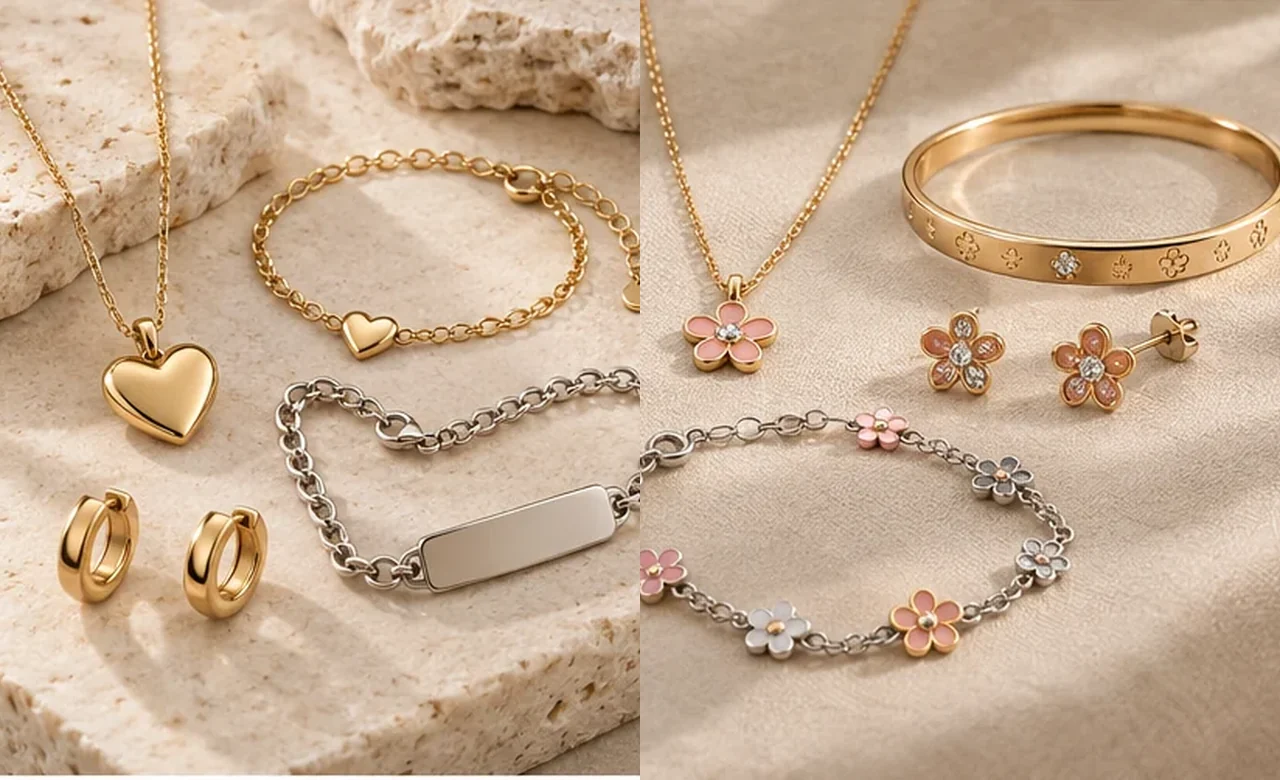
Children’s Jewelry Starts With the Intended Age Group
For a children’s jewelry program, “small size” is not an adequate product specification. A design brief should identify the age range, typical use, wearer and intended sales market before material or construction choices are finalized. In the United States, a children’s product is generally one intended primarily for children 12 years of age or younger; product presentation, size and marketing help determine the classification.
A children’s jewelry manufacturer should use these inputs to evaluate a brand’s design brief, not treat a retail age category as an approval for use. HaoLustra reviews the proposed age and market alongside the requested product specifications. An age label alone does not establish safe use, and baby or infant jewelry is not automatically included in our proposed scope.
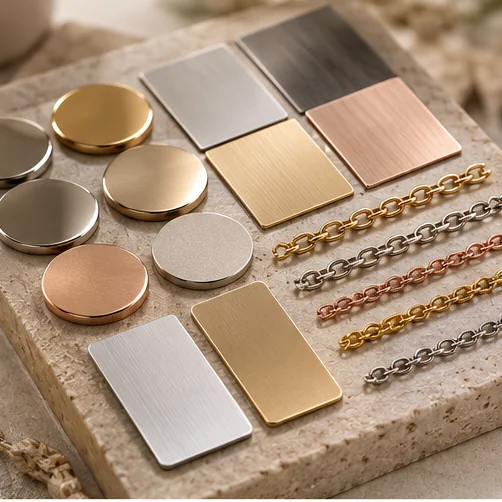
Specify Every Material and Contact Component—Not Just the Main Metal
Children’s jewelry may contain more than a chain or pendant: clasps, posts, jump rings, charms, stones, surface treatments and other attached elements need to be identified in the product bill of materials (BOM). A buyer may request sterling silver, gold, stainless steel or another metal, but material availability and suitability must be confirmed per project.
Do not rely on generalized terms such as “hypoallergenic,” “nickel-free” or “non-toxic” in place of material documentation or applicable testing. For the US market, federal children’s-product lead limits can apply to accessible components and similar surface coatings; other hazards require a separate SKU-specific review.
- Specify metals and alloys used for each contact and decorative component.
- Record coatings, color processes, stones, beads, threads and joining materials.
- Define which material documents and tests the brand/importer requires.
A component-level specification for a children’s jewelry project
- Base metal: specify the exact alloy or grade for pendants, chains and earrings instead of only a marketing metal name.
- Skin-contact findings: separately identify earring posts, backs, clasps and jump rings; they may differ from the main body.
- Coatings and decorations: document plating layers, enamel, paint, stones, beads, adhesives and other accessible components.
- Evidence: request material declarations and agree which components need applicable laboratory testing for the destination market.
Consumer discussions describe uncertainty about metal allergies and coating wear. These are individual experiences, not laboratory evidence or proof that a specific HaoLustra product causes or prevents reactions.
Review Size, Closures, Attachments and Detachable Parts Before Sampling
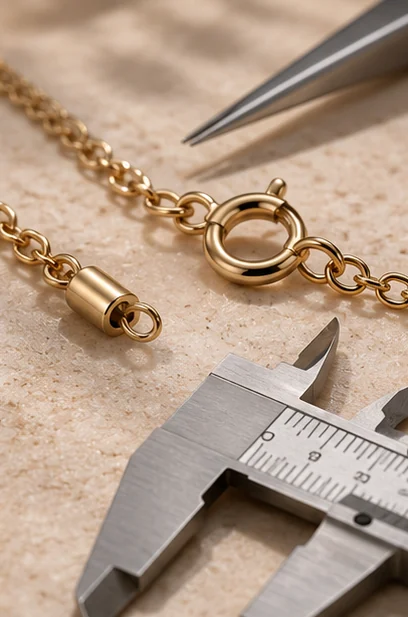
A child’s jewelry design can introduce questions that an adult collection may not raise in the same way. A clasp must be assessed for the proposed wearer and activity; decorative stones or charms require an attachment review; chain and cord constructions need careful consideration of entanglement and snagging risks. A pretty render is not an accepted engineering standard.
The engineering brief can include dimensioned drawings, closure type, attachment detail, fit samples and critical sample checkpoints. Whether a particular feature is appropriate should be reviewed by the buyer’s product-safety team and a qualified testing partner as necessary.
Custom Kids’ Jewelry Collections: Product Directions for Brands
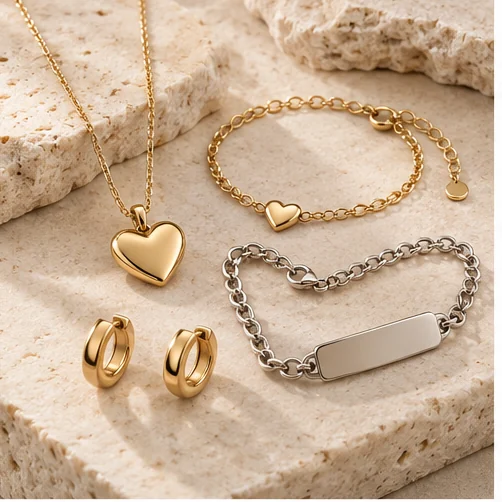
Name necklaces, birthstone details, engravable ID bracelets and personalized gift concepts can inform a proposed collection. This page concerns design and manufacturing feasibility rather than selling retail pieces. The illustrations are concept directions, not documented HaoLustra children’s product samples.
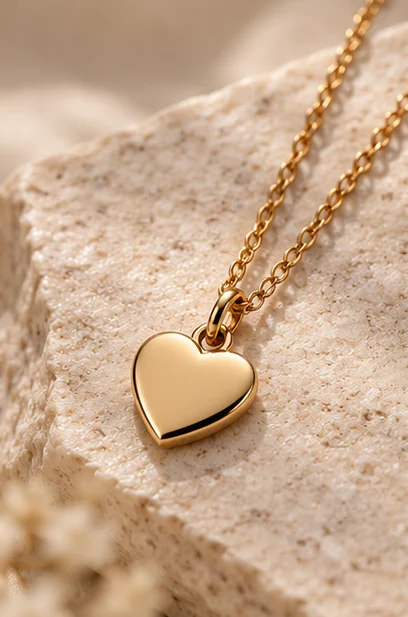
Necklaces & Pendants
Initial, name or engraved pendant concepts; document chain length, pendant edges, attachment method and age-related wear risks. Personalized motifs do not determine safety.
Illustrative category concept; subject to design and safety review.
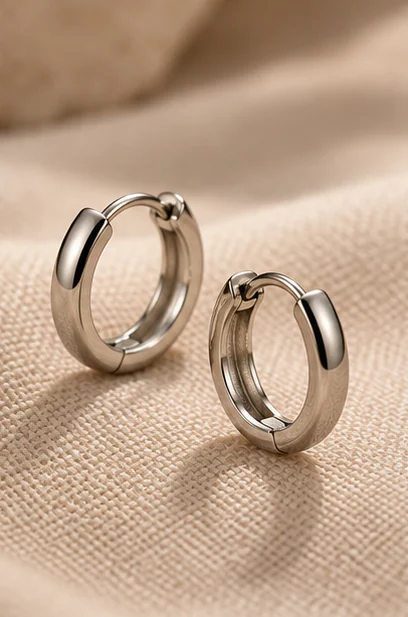
Earrings
Stud, small hoop and engraved concepts; specify post metal, backing design, decorative attachment and intended age for review.
Illustrative category concept; subject to design and safety review.
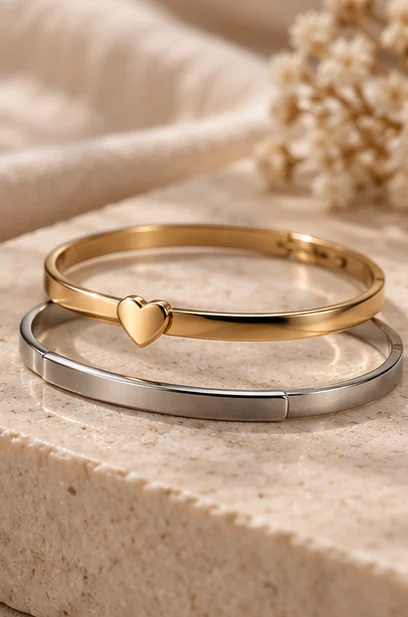
Bracelets
Engraved ID plates, simple links or charms; record wrist-size range, fit, closures, detached-element concerns and number of saleable SKUs.
Illustrative category concept; subject to design and safety review.
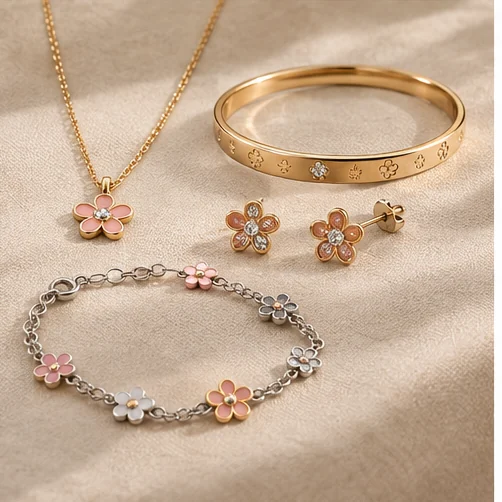
Coordinated Sets
Two- or three-piece brand collections; set pricing, individual components, packaging and documentation must be planned per item rather than assumed from one set image.
Illustrative category concept; subject to design and safety review.
For the general manufacturing approach, see Custom Jewelry Manufacturing. Individual jewelry formats require their own design and specification review.
US Children’s Jewelry: Plan Product Testing and Documentation Early
Compliance is a design input, not a badge added after production. Whether a requirement applies depends on the product, intended age, use, parts and destination market. HaoLustra’s general manufacturing services do not by themselves establish children’s-jewelry certification for a specific SKU.
Identify applicable requirements
In the US, children’s products can be subject to lead rules and other product-specific regulations. Children’s jewelry also has an ASTM F2923 voluntary industry standard; it should not be represented as a universal mandatory federal certification. Toy-like jewelry or magnetic components may create additional requirements.
Assign testing and certificate responsibility
When a children’s product is subject to applicable CPSC safety rules, an accepted third-party lab’s testing and a Children’s Product Certificate (CPC) are generally relevant. For imported goods, the importer normally bears CPC-issuance responsibility; a test lab does not issue the CPC. Obtain product-specific advice before placing the order.
Map materials and measurable limits
For applicable US children’s-product rules, accessible component lead content is limited to 100 ppm and lead in paint or similar surface coatings to 90 ppm. These are regulatory limits—not claims that a HaoLustra sample has passed tests.
Plan traceability information
Children’s products can require tracking information identifying the manufacturer/importer or private labeler, production location and date, and distinguishing batch details, to the extent practicable. Coordinate the required data before artwork and carton layouts are finalized.
U.S. documentation handoff: settle responsibilities before tooling
- Classify the finished product using its actual intended audience, appearance, use and marketing—not just a label.
- List the applicable children’s-product rules for the specific SKU, including metal parts, accessible coatings and any extra rules triggered by toys or magnets.
- Agree on the accepted laboratory, sample revision, testing scope and who holds reports. For imported U.S. children’s products, the importer generally issues the CPC based on compliant evidence; a laboratory provides results, not the certificate.
- Review the tracking label and packaging artwork with the brand/importer so batch, origin and producer information can be identified as applicable.
A CPC is a product-related certificate, not a blanket factory badge. This page does not assert that any HaoLustra children’s SKU currently has one. CPSC CPC requirements →
For buyers in Europe, the UK or another market, applicable rules require separate assessment. This section is informational and does not provide legal advice or certify the suitability of any proposed design.
What to Check in a Children’s Jewelry Sample
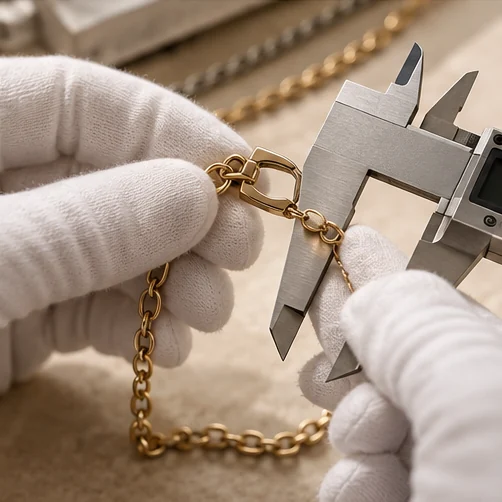
A usable sample sign-off has three separate layers: appearance and dimensions, construction and components, and applicable independent test evidence. Approval of the first two does not automatically satisfy the third.
A sample should be approved against the design, the intended age range and the written part specifications—not just photographed for appearance. For an appropriate project, the acceptance plan may cover critical dimensions, clasp operation, attachments, exposed edges, coatings, visible finish, identifying marks and pack-out requirements.
Engineering observations and visual inspection do not replace required laboratory testing. Agree on who commissions tests, what versions are tested and what documentation the importer needs, before bulk manufacture is authorized.
- Match the sample revision to the approved drawing and material/components list.
- Confirm actual necklace or bracelet dimensions and age-specific fit assumptions.
- Inspect edges, joints, closures and the method used to retain any charms or decorative parts.
- Agree on visual finish, coating references and any available material documentation.
- Check that SKU, packaging copy and tracking data match the agreed product identity.
- Record independent testing, required reports and buyer/importer approval separately before bulk commitment.
MOQ and Pricing for Custom Kids’ Jewelry: Count Every SKU
A children’s collection may contain multiple sizes, engraving options, materials and set configurations. Ask whether a minimum applies to each style, finish, size or finished set. HaoLustra’s general low-MOQ positioning is not a guaranteed minimum or price for children-directed jewelry. A kids jewelry OEM quote should therefore be built from actual style and variant requirements.
Style and construction
Materials, assembly method, closures and component sourcing can change what is viable for a small batch.
Sizes, colors and engraving
Confirm whether individual sizes and personalization variants are consolidated or counted as separate SKUs.
Single pieces vs matching sets
Clarify whether an order quantity is measured in complete packaged sets or by necklace, earring and bracelet separately.
For the broader MOQ service, see Low MOQ Jewelry Manufacturing. Submit quantities for a child-specific feasibility quote.
Private Label Packaging and Product Traceability Should Be Planned Together
Design the retail identity and compliance information together: otherwise a beautiful gift box may need to be redone after the importer finalizes the intended age, tracking details or required warnings.
- Brand elements: logo card, name/engraving display, care insert and gift presentation.
- SKU identity: product type, size/variant, style ID and linked approved revision.
- Tracking fields: maker/importer or private-labeler, production date/place and batch or run data where practicable under applicable U.S. requirements.
- Artwork approval: importer checks market-specific claims, warnings and labels before print approval.
When planning private label kids jewelry, a coherent range needs both a recognizable retail presentation and accurate product identity. Jewelry cards, boxes and pouches can be discussed during a general private-label project; tracking-label placement, applicable warnings, SKU identifiers and production-lot references belong in the same brief.
Packaging appearance does not establish product safety. The buyer/importer should approve the legal content, age descriptions and traceability information for the target market before artwork is finalized.
Explore HaoLustra’s general packaging service →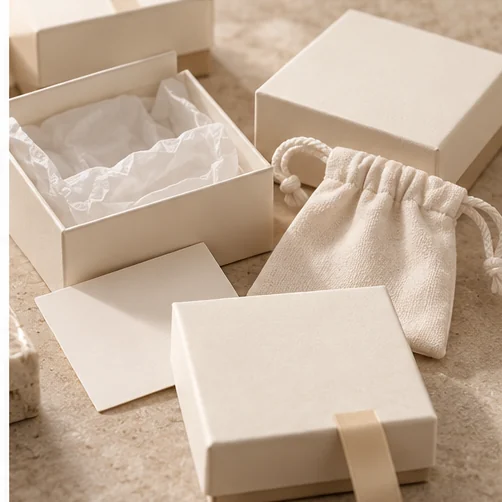
How HaoLustra Reviews a Custom Kids’ Jewelry Request
Define age, market and item
Provide the intended audience, product concept, target countries and quantities by SKU.
Review materials and design
Discuss proposed components, finishing, dimensions, closures and required evidence.
Agree on approval criteria
Define prototype, physical checks and buyer/importer-directed laboratory requirements.
Who confirms what before an order?
Define wearer, positioning and intended market; decide applicable rules with qualified advice, approve designs and issue required importer documents.
Review proposed customization and production feasibility; clarify supplied components, sample checkpoints, quantities and available project records before accepting scope.
Perform the agreed applicable tests where required and issue laboratory reports. Laboratory availability and cost are not promised before confirmation.
Only after feasibility, compliance responsibilities and sample criteria are resolved would production quantities and a repeat-order plan be agreed. This sequence reflects project review—not an assertion that a particular child’s jewelry design has already been manufactured, tested or certified.
Related services: Quality Control · HaoLustra Qingdao Factory · OEM/ODM Jewelry Manufacturing.
Custom Kids’ Jewelry Manufacturing FAQs
Practical answers for brand founders, boutiques and sourcing teams reviewing children’s jewelry production. Product-by-product specifications and destination-market obligations must be confirmed before approval.
Can HaoLustra review a custom kids’ jewelry design for my brand?
Yes. Send your intended age range, target market, drawing or reference, materials and quantity by style. HaoLustra can assess a children’s jewelry project against manufacturing feasibility and the buyer’s safety and documentation requirements before committing to production.
Does children’s jewelry sold in the US require third-party testing and a CPC?
Children’s products subject to applicable CPSC safety rules generally need testing by a CPSC-accepted third-party laboratory and a CPC. For imported goods, the importer normally issues the CPC based on compliant evidence. Requirements depend on the specific product; a general factory certificate is not a substitute.
Is ASTM F2923 a mandatory US certification for children’s jewelry?
CPSC describes ASTM F2923 as a voluntary children’s-jewelry consensus standard. It is distinct from mandatory US children’s-product requirements, including applicable lead limits and other safety rules. Review which requirements apply to the actual design and market.
Can we develop personalized kids’ necklaces, name tags or engraved bracelets?
These are possible product directions for review rather than guaranteed finished SKUs. Share the motif, size, clasp, fastening method, intended age and material requirements so feasibility and testing needs can be assessed.
What should a brand approve in a children’s jewelry sample?
Check the approved materials list, critical dimensions, join and closure construction, appearance, marking and packaging. Include independent safety-test and documentation requirements where applicable, rather than using a visual sample alone as proof of compliance.
What is the MOQ for custom children’s jewelry?
There is no universal children-specific MOQ confirmed on this page. We review requested designs, size and color variants, components, assembly and set composition before providing a project-based quantity and price proposal.
Is children’s jewelry the same as toy jewelry?
No. Classification depends on the product’s intended use, design and presentation. Toy jewelry can trigger additional toy-product requirements. Please specify whether the proposed item is wearable jewelry, a play item or part of a craft kit so the compliance scope is not assumed.
How can our brand plan repeat production and consistent SKU records?
Start with an approved specification and sample reference for each item, including components, version, size, packaging and batch identifiers. Document actual inspection and traceability responsibilities in the confirmed production agreement.
Can we label a collection as “hypoallergenic” or “nickel-free”?
A product description alone is not proof of alloy content or suitability. Brands should identify the metal in each skin-contact component, any coating layers, the evidence supporting the proposed claim and the rules of the selling market. Claims should be approved only for the actual finished SKU.
Are magnetic clasps suitable for custom children’s jewelry?
Do not assume they are. The U.S. magnet rule can apply to products designed for jewelry use, including children’s jewelry, when subject magnets are involved. Submit the proposed magnet dimensions, attachment and construction for a qualified product-specific review before design approval.
Can babies or children under three wear the proposed jewelry?
Infant and under-three designs are not automatically within this page’s project scope. Intended age, foreseeable use, small or detachable parts and any extra applicable requirements must be considered before HaoLustra can assess feasibility. Do not interpret a small product size or a gift-category label as proof of suitability.
How should a buyer describe a matching kids’ necklace-and-earring set in an RFQ?
Provide a component-level description for every piece, intended age, material and fastening specifications, individual sizes, packaging details, the number of sets requested and whether MOQ should be evaluated per piece or per complete set. Any testing and documentation plan must address each relevant product and component.
Start With a Clear Kids’ Jewelry Development Brief
Share your children’s collection concept and intended age group, sales market, actual jewelry category, sketch/photo or CAD reference, all metal and nonmetal components, chain/clasp/attachment details, size and finish variants, per-SKU or per-set quantities, requested testing/report responsibilities, branded packaging and launch target. Clearly mark any unknowns; we can review feasibility before quoting, but cannot assume every design or certification is available.