Custom Sterling Silver Jewelry Manufacturer for Brands
HaoLustra supports jewelry brands, retailers and professional sourcing teams developing custom 925 sterling silver jewelry from China. Our Qingdao-based manufacturing business helps turn a design direction into a defined product brief, with attention to silver content, finished weight, component construction, sampling and the details that should be approved before a production order.
We can discuss sterling silver necklaces, earrings, rings, bracelets and coordinated collections. A useful first conversation is not simply “Can you make this design?” It is which parts must be sterling silver, how the finished piece should feel, what finish is required, and what evidence the buyer needs to support the final product description. Feasibility, project MOQ, prices, sampling arrangements and supporting documentation are reviewed against the actual design.
Request a Sterling Silver Quote · Send Your Design
For business buyers: custom development, material-specification review, samples and production planning—not a ready-stock silver jewelry catalogue.
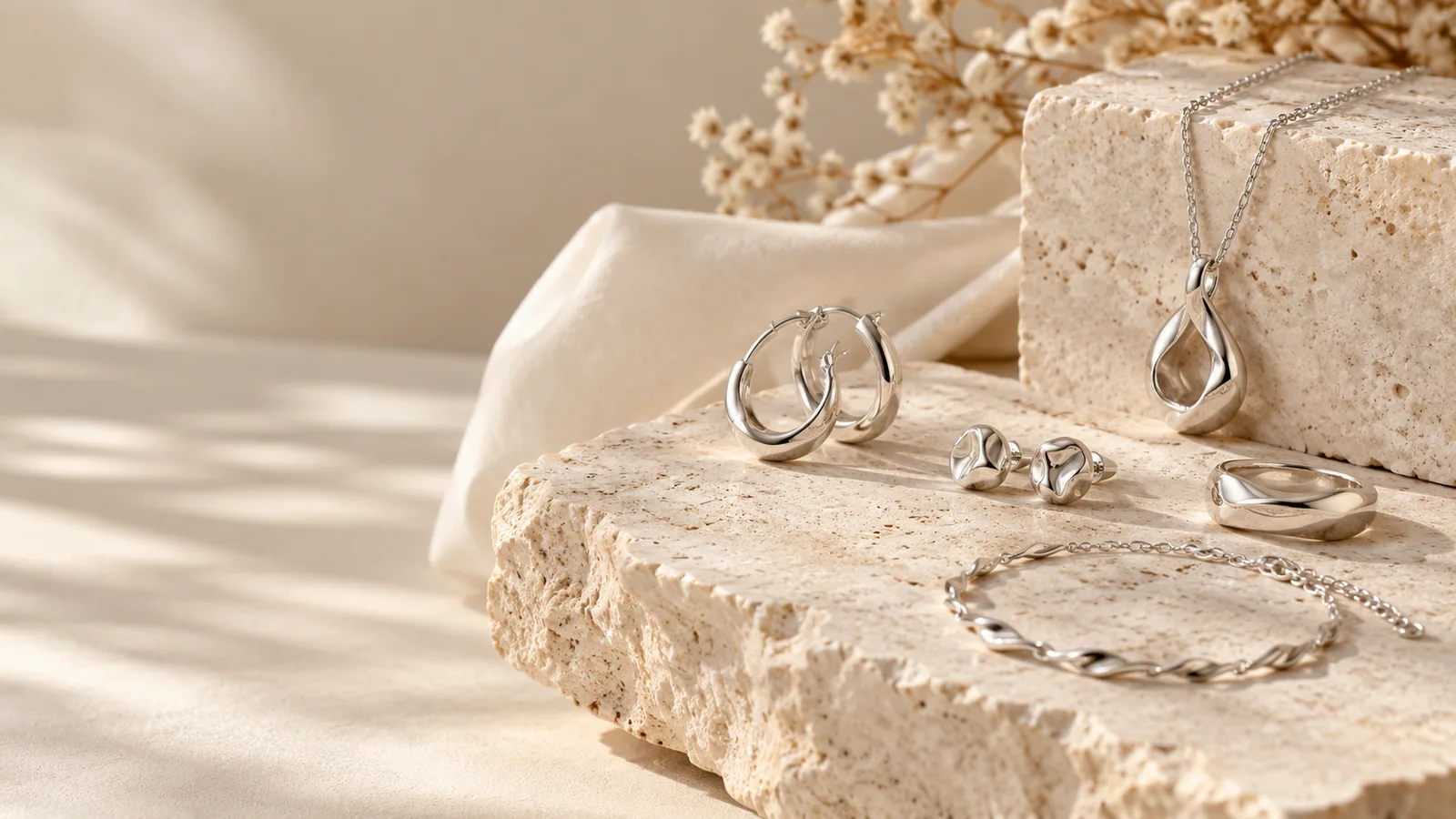
1. Sterling Silver, Silver-Plated Metal, and Other Material Identities
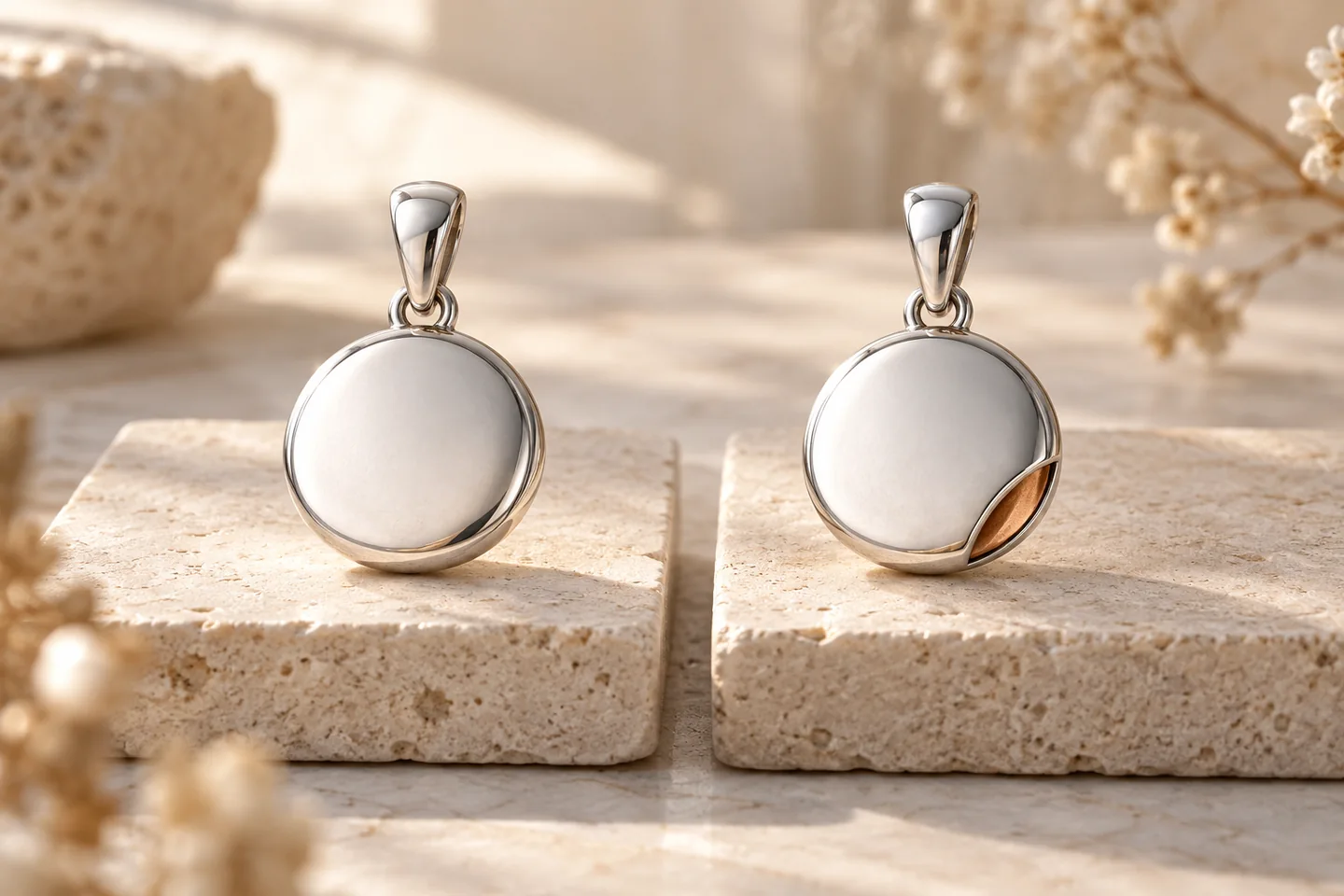
925 sterling silver is a silver alloy containing 92.5% silver by weight. A piece made from another metal with a silver-colored finish, or a thin silver coating, should not be described as sterling silver simply because it looks similar. That distinction matters when a brand sells jewelry under a material claim or is asked to document what it has supplied.
For each design, the material specification should identify the main body and any separately sourced components rather than assuming every visible part has the same composition.
| Material description | What the buyer should understand | What to record in the specification |
|---|---|---|
| 925 sterling silver | A silver alloy with a nominal 92.5% silver content | Which components are sterling; supplier declaration or testing requirements |
| Silver-plated base metal | A different core metal with a silver surface layer | Base metal, coating specification and which components are plated |
| Sterling silver with a further finish | Sterling alloy with an additional surface treatment, if selected | Sterling component identity and the separate finish requirement |
| Silver-tone jewelry | An appearance description, not proof of silver content | Actual base metal and coating, confirmed before product copy is approved |
A necklace, for example, may include a pendant body, chain, clasp and jump rings supplied as different components. Ask for a component-by-component material description before approving “sterling silver” copy for the complete item. If the project uses a combination of metals, the final description should say so accurately.
For a broader comparison of all-material manufacturing routes, see our custom jewelry manufacturing services.
2. Define Silver Weight, Dimensions, and Wearability Before Sampling
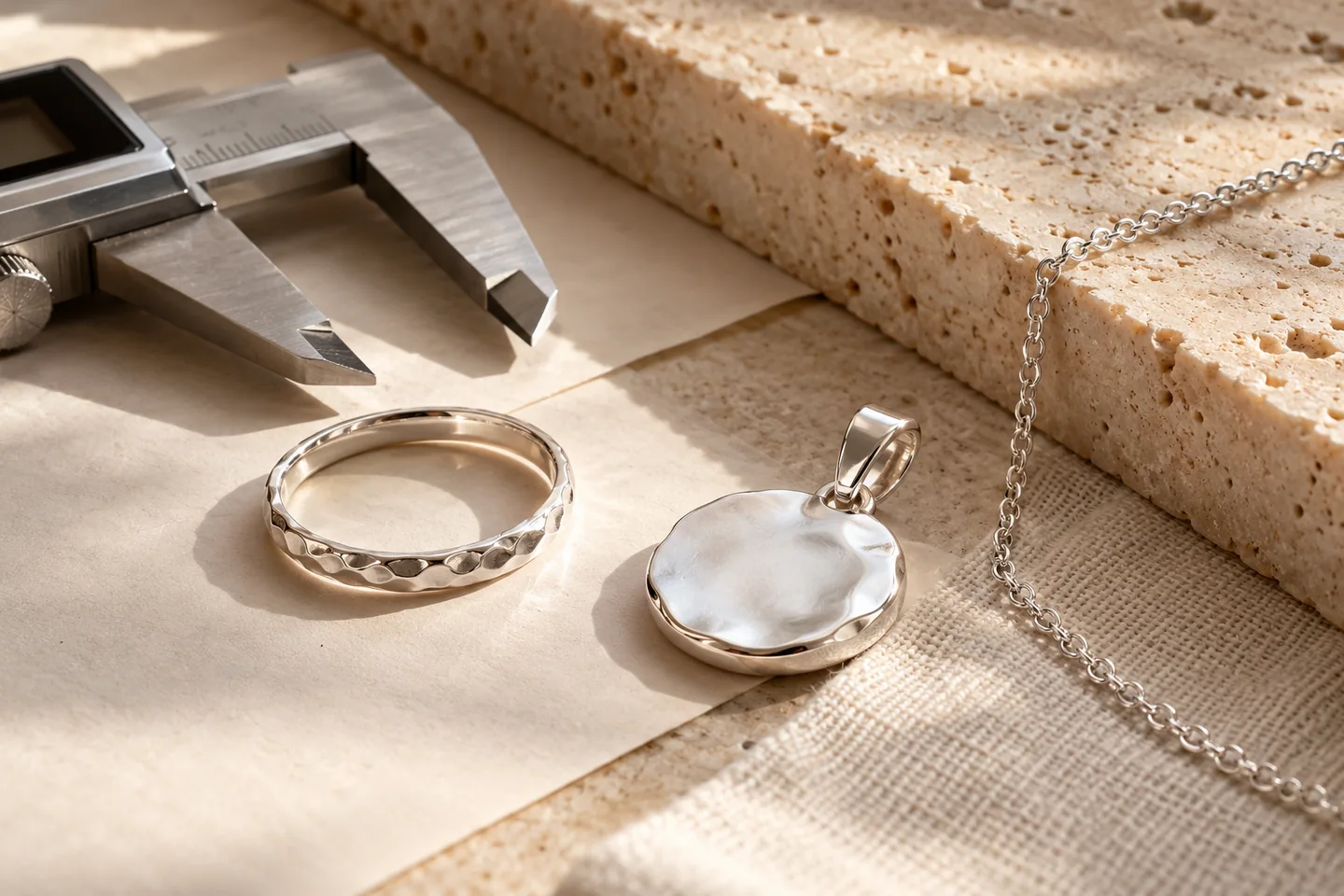
The same silver design can produce very different customer experiences depending on its thickness, finished weight and connection points. A pendant can look substantial in a rendering but feel too light in hand; a ring band can look slim while needing sufficient structure for its intended size and setting.
Before asking for a quotation or sample, identify the measurements that affect both cost and wearability:
- Expected finished weight: record a target or acceptable range in grams for the complete piece, and distinguish it from the estimated silver weight used for costing.
- Critical dimensions: outside diameter, band width, section thickness, pendant thickness or bracelet profile, whichever applies to the design.
- Wearable lengths and sizes: necklace or bracelet length, ring-size range and any extension options.
- Connection details: chain gauge, clasp type, jump-ring size, hinge or attachment dimensions and expected movement.
- Stone or decorative elements: their approximate size, setting position and effect on the final weight and balance.
These details are not a substitute for an approved physical sample. They give both parties measurable reference points when deciding whether a design is ready for production. A quotation based on an image alone may change after size, silver weight and construction are clarified.
3. Design Details That Matter for Custom 925 Silver Jewelry
An attractive rendering is not yet a production specification. The design review should establish which features are essential to the finished sterling silver piece and which details may need adjustment for manufacturability or wear.
For a custom silver ring, the review may involve the band section, raised details and stone-setting geometry. For earrings, it may involve the weight of a hanging element, the post or hook material and how two pieces balance as a pair. A pendant may require attention to the bail opening, chain compatibility and attachment strength.
Useful questions to answer before paying for development work include:
- Is the planned outline compatible with the chosen manufacturing route and finish?
- Are thin or projecting details likely to need a different section or support point?
- How will any setting, engraving or moving connection be represented in the sample specification?
- Which findings, fasteners and chains require their own material confirmation?
- Which modifications need a new sample rather than a minor specification update?
Share sketches, reference images you are authorized to use, drawings or existing samples. HaoLustra can review the proposed direction and discuss development requirements; specific casting, CAD, setting or finishing methods are confirmed for the project rather than promised for every design. For the broader differences between development routes, see OEM and ODM jewelry manufacturing.
4. Silver Plating, Surface Finishes, and Realistic Tarnish Expectations
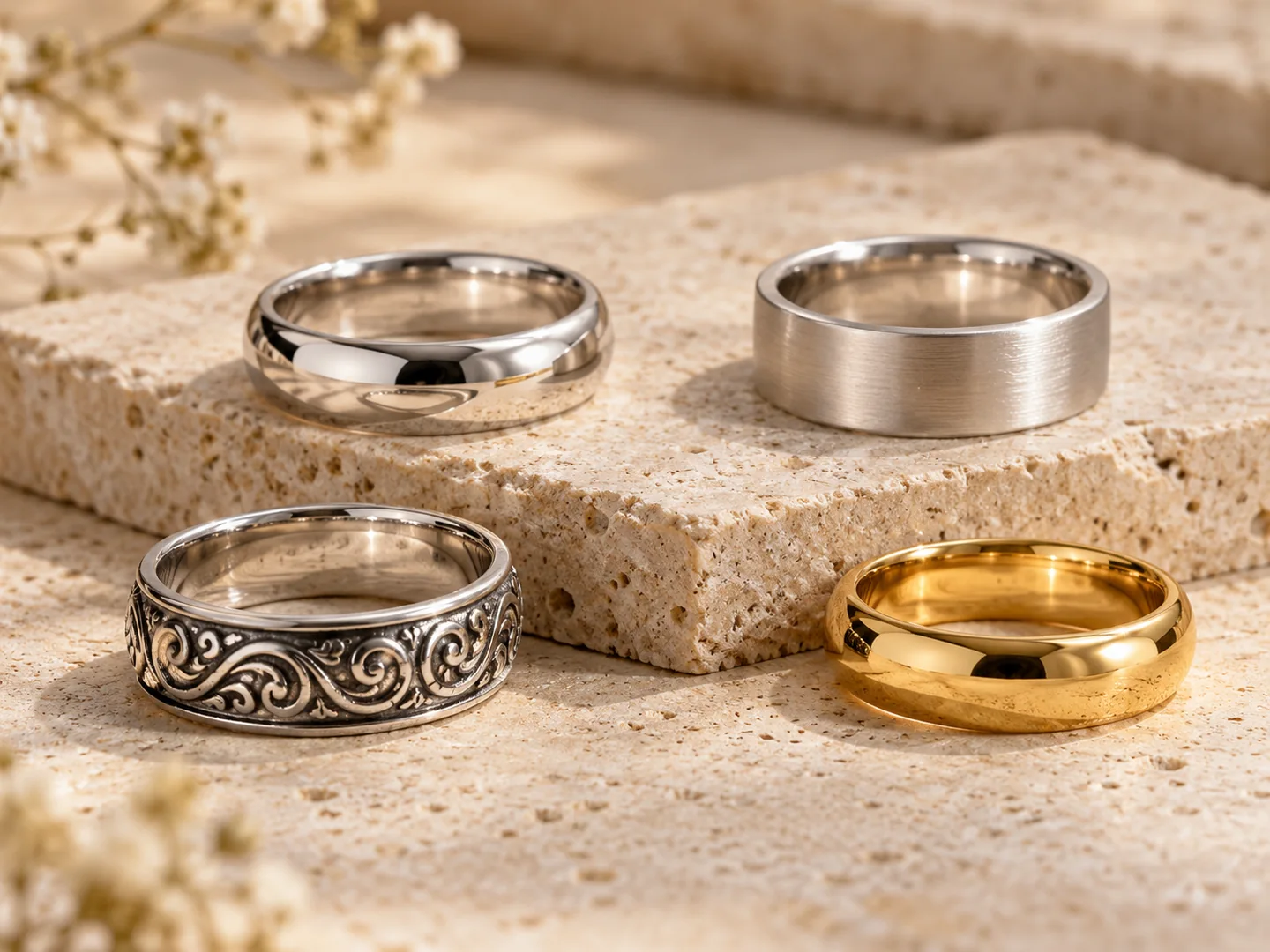
A sterling silver base and its surface finish are two separate decisions. A brand may prefer an uncoated silver appearance or wish to evaluate a plated or treated finish for a particular collection. The correct description should distinguish the base alloy from any additional coating.
When specifying a finish, ask the supplier to identify the proposed finish type, color reference, visible coverage, any relevant coating measurement or test requirement, and surfaces that may be difficult to finish consistently. Confirm whether findings and main components will receive the same treatment.
Sterling silver can tarnish or darken over time. That is different from a plated coating wearing away, although both may affect the appearance of a finished product. Frequency of wear, storage, moisture exposure, cosmetics, cleaning methods and the particular finish can influence what the customer experiences.
A sample approval should therefore include the appearance at handover and realistic care language. Avoid product promises such as “never tarnishes,” “permanently waterproof,” or “lifetime plating.” A gold-colored coating over a silver base also should not automatically be called vermeil without checking the relevant market’s requirements for that term and the actual coating specification.
5. Material Evidence and Sterling Silver Product Descriptions
A “925” stamp is a useful identification mark, but it is not a complete material verification plan. Buyers responsible for their own product listings need to understand what the claim covers, which component was checked and what supporting documentation is available for the relevant SKU or batch.
A practical approval file can ask for:
- Component declaration: which main parts, chains, clasps or findings are represented as sterling silver and which, if any, use different materials.
- Supplier or production reference: the relevant material description and source or batch reference when obtainable.
- Test or inspection requirements: whether the target market, sales channel or customer specification calls for independent material testing, restricted-substance assessment or another product-level check.
- Marking and labeling instructions: proposed product marking and accurate written material claims for the destination market.
- Exceptions and changes: any substitutions or component changes that must be approved before a reorder.
Different markets can impose different obligations. A stamp by itself is not proof of every component’s purity, and a supplier statement is not automatically a laboratory certificate. HaoLustra can discuss material and documentary requirements during development; availability of any specific test report or certification must be confirmed for the product, not assumed across the website.
For the broader inspection workflow, see quality control. For customer-facing cards, inserts or branded product presentation, see custom jewelry packaging.
6. Approve a Silver-Specific Sample Before Bulk Production
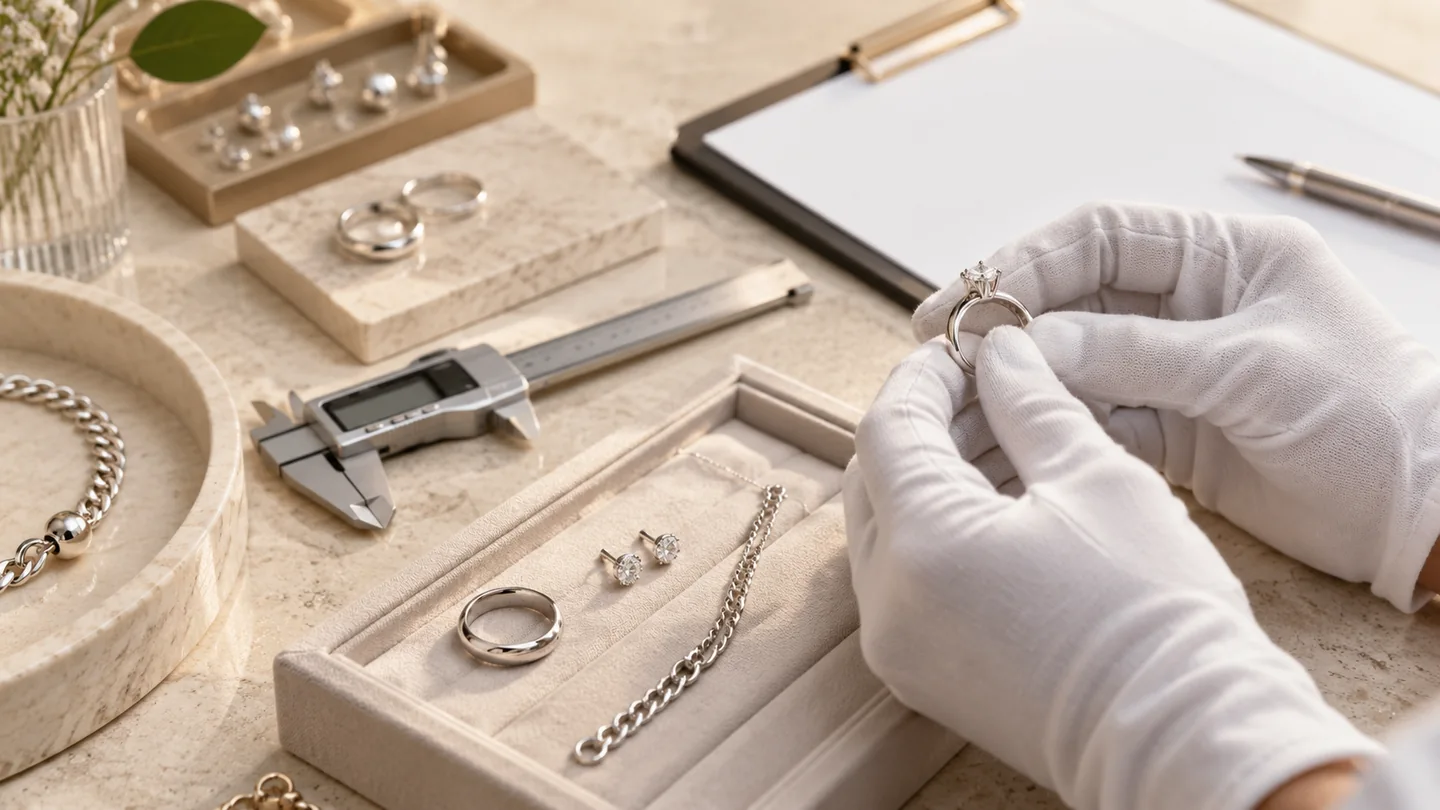
An approved sterling silver sample should become a measurable reference, not just a photo that looks right. The sample review is where a brand can align appearance, metal details, fit and documentation before a production commitment.
Record the decision for the actual design:
- Is the main item’s material identity documented as requested?
- Do the sample’s finished weight and critical dimensions fall inside the agreed range?
- Are ring fit, necklace length, clasp movement or earring pair balance satisfactory?
- Are joints, connections, settings and visible edges acceptable when inspected at the agreed viewing standard?
- Is the finish appearance consistent with the approved reference, including areas near attachment points?
- Does the sample use the findings, chain and packaging components that will be ordered—or have the exceptions been recorded?
Photographs can capture the approved appearance, but they should accompany the reference sample and written specification rather than replace them. If the design changes, identify whether the change affects weight, material description, finish, component compatibility or price before re-approval.
Our sample kit and pre-production sampling page explains the general sampling route; this section focuses on the sterling-silver-specific checkpoints a buyer should not overlook.
7. Silver Batch Quality and Reorder Change Controls
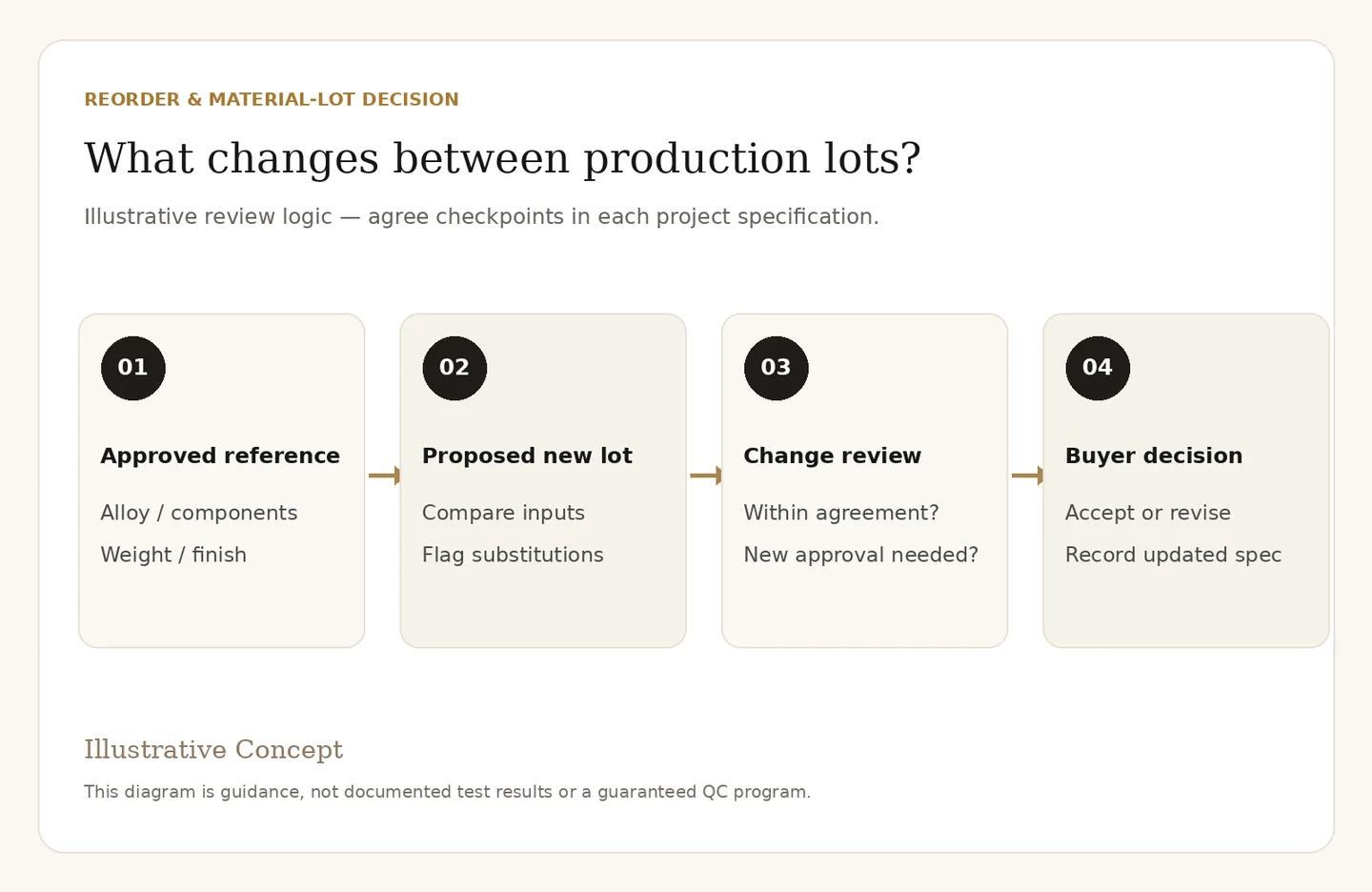
A repeat order should be checked against an agreed silver product specification, not only the original product photograph. Reorders can involve a different raw-material lot, findings supplier, coating process or size mix. Those changes may matter even when the nominal design stays the same.
For 925 jewelry, a useful production reference records the approved alloy description, component list, expected weight range, critical dimensions, finish reference, attachment details and any requested verification method. On reorders, buyers can identify which attributes must remain within the agreed specification and which changes call for another sample or approval.
Examples of material changes worth discussing include a different clasp alloy, adjusted metal section that shifts finished weight, a revised gold-tone finish, a new stone-setting geometry or a component supplier substitution. A change should not silently convert an item described as sterling silver into a silver-plated base-metal product.
This is a proposal for how to control silver-specific acceptance criteria, not a claim that every HaoLustra order automatically includes every possible laboratory test. The exact checks, tolerance levels and any outside testing should be agreed for the order. See our wider jewelry QC approach for cross-material inspection topics.
8. Jewelry Forms a Brand Can Develop in Sterling Silver
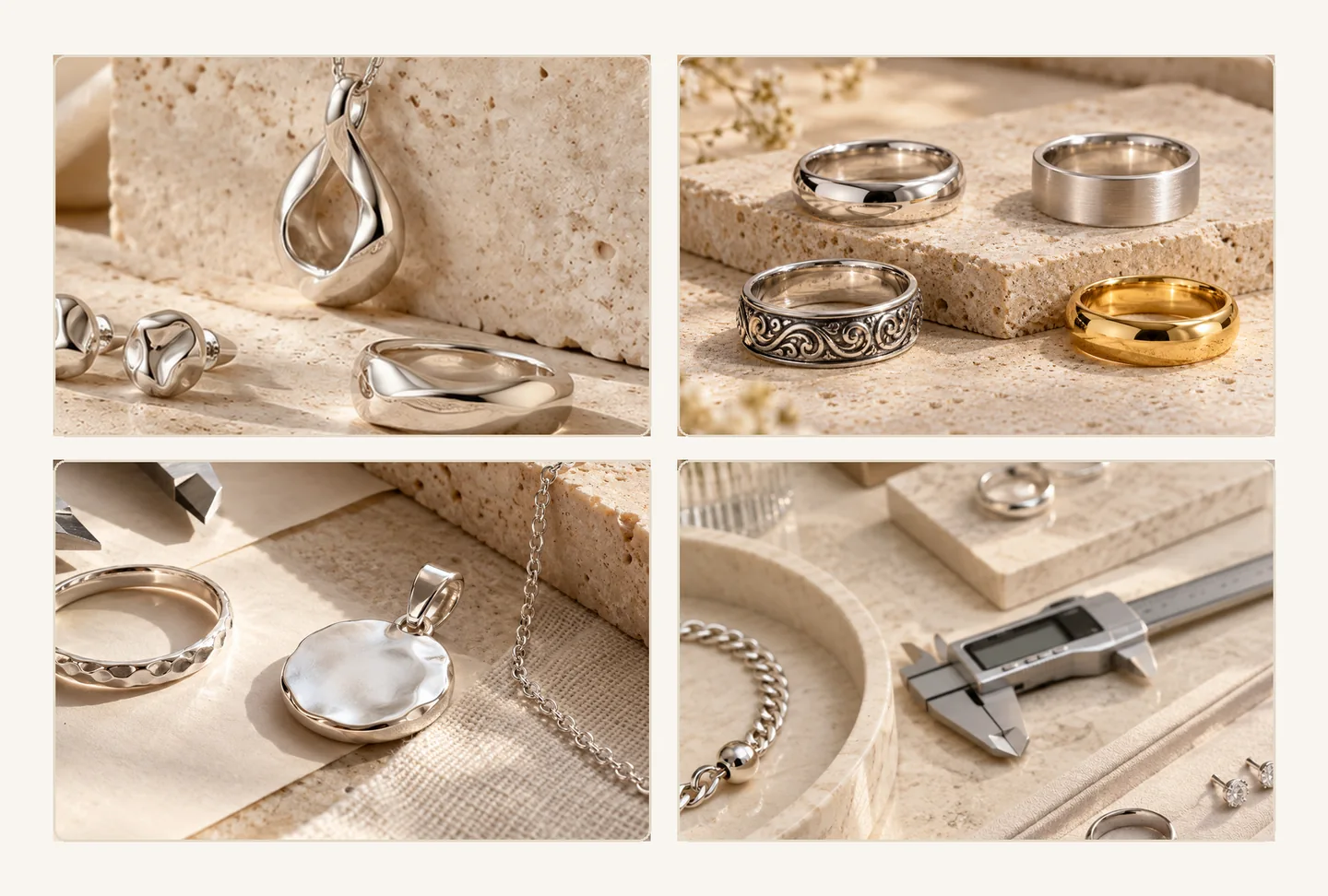
925 sterling silver can support a coordinated brand direction across multiple jewelry forms, but each SKU needs its own material and construction brief. A collection could include minimalist necklaces and pendants, studs or drop earrings, bracelets, rings and matching sets, depending on the proposed design and approved production plan.
For buyers planning more than one SKU, it helps to identify which specifications are shared—such as alloy naming or a finish color—and which must be assessed separately, such as ring sizing, pendant weight or earring post construction. Coordinated styling does not automatically mean that all pieces should share the same minimum order or material-component specification.
If your main question is how necklace components should be developed, consult custom necklace manufacturing. If it concerns complete matching sets and per-component ordering, consult custom jewelry set manufacturing. This page is the common reference for the sterling silver material across the collection.
9. How HaoLustra Supports a Silver Jewelry Project from Qingdao
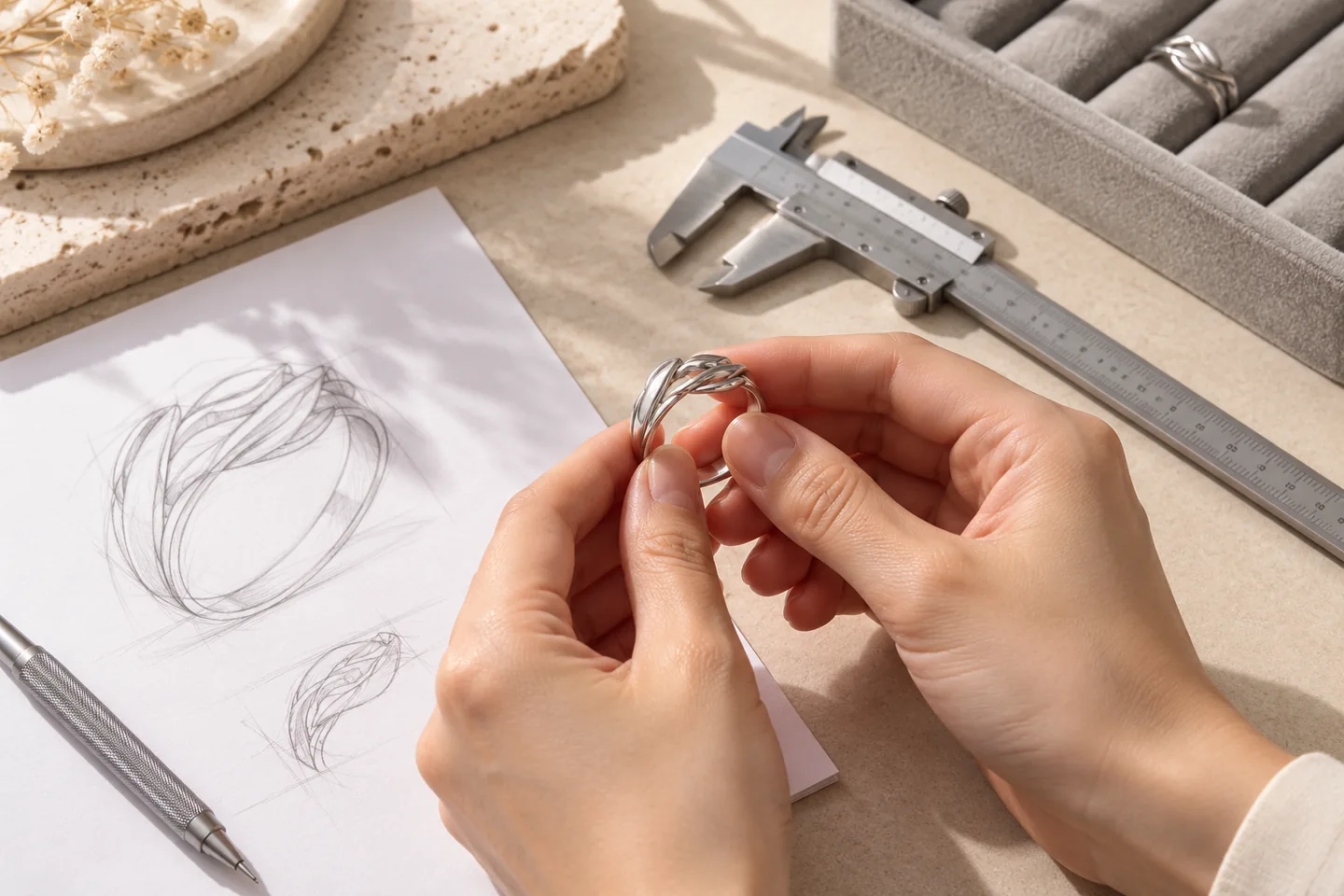
HaoLustra is a Qingdao-based jewelry manufacturing business serving brands and professional buyers developing their own collections. For a 925 sterling silver project, the practical starting point is the product brief: design, intended alloy and components, dimensions, finish, sample expectations, order scope and destination market.
The discussion can cover product-development requirements, sample planning, private-label presentation and the approvals needed before a proposed production order. Customers can share an original design, technical drawing, authorized reference image or existing sample for review.
What we can confirm at the inquiry stage is the project route and what information is needed to evaluate it. The availability of a particular casting method, plating process, assay, hallmarking arrangement, certificate or shipment schedule depends on the approved design and supply plan. HaoLustra does not describe an unverified silver test or certification as a standard capability across all projects.
Learn more about our China jewelry factory and private-label jewelry manufacturing support.
10. What Drives the Cost of Made-to-Order Sterling Silver Jewelry?
Finished silver weight is an important cost input, but it is not the whole quotation. Two products with similar dimensions can require different amounts of silver, different finishing work or different levels of sample development.
For a meaningful quote, buyers should identify the expected silver weight or physical dimensions alongside the design complexity. Other possible price drivers include the number of components and joins, size variants, requested surface finish, stone or decorative elements, sample revisions, project-specific tests, private-label packaging and the order quantity per approved variation.
A clear request can distinguish one-time development or tooling costs, any sample costs, the production unit quotation and optional documentary or packaging requirements. Whether each charge applies must be confirmed for the specific project. Silver-material price changes may also affect a quotation, so clarify the validity period of any offered price.
If you are testing a new collection and want to discuss the quantity needed for each style, use our low MOQ jewelry manufacturing service. We do not quote one universal silver MOQ or lead time for all designs.
11. Sterling Silver Jewelry Manufacturing FAQ
What does 925 mean in custom sterling silver jewelry?
925 means the sterling silver alloy contains 925 parts of silver per 1,000 parts of alloy by weight, or 92.5% silver. The remainder is made up of other alloying metals. When approving a finished jewelry item, ask which components have that composition and how any different chain, clasp, post or finding materials are described. The number refers to alloy content, not a guarantee of scratch resistance or freedom from tarnish.
Is sterling silver the same as silver-plated brass?
No. Sterling silver and silver-plated brass have different core materials. Sterling silver is a silver alloy, while silver-plated brass has a brass base with a surface layer of silver. Both may appear silver-colored in photographs. A buyer should specify the base material of the main jewelry components, rather than rely on product appearance, and ensure the finished product description does not treat the two materials as interchangeable.
How can a brand confirm the metal specification for a 925 silver collection?
Start with a component-level material specification and request the evidence appropriate to the product. Ask which parts are represented as sterling silver and whether supplier declarations, lot records or independent test results are available. A brand selling into a regulated market may need to determine additional verification obligations. Document availability and testing scope should be agreed before production; no one document should be assumed to cover every component without checking.
Does a 925 stamp replace material verification?
No. A 925 mark communicates a material claim, but the mark alone is not independent verification of composition. Buyers should match the marking to the stated product components and any supporting supplier records or tests appropriate to the order. Rules for marks and product descriptions vary by market. If a project needs specific hallmarking or product-level test evidence, raise it explicitly in the inquiry rather than assuming it is included.
Can a sterling silver design use gold plating or another finish?
A sterling silver design may be evaluated for an additional surface finish, including a gold-colored or rhodium-type finish, subject to production feasibility. The base alloy and the finish are separate specifications. Confirm coating color, type, relevant thickness or performance requirements, and whether all components can be finished consistently. Avoid terms such as “vermeil” or precise coating-life claims unless the actual construction meets the applicable requirements and supporting evidence is available.
Can sterling silver tarnish, and how should a brand describe it?
Yes. Sterling silver may tarnish or darken over time, and its appearance can be affected by wear, storage and the surface finish. Product content should state the alloy and any coating accurately, with practical care guidance appropriate to the approved design. Do not promise that sterling silver will never tarnish, that a coating lasts for life or that every finished item is waterproof without specific substantiation.
Which dimensions and weight details should be approved before sampling?
Approve dimensions that affect fit and structure, plus the intended finished weight or acceptable range. Depending on the item, these may include ring size and band section, pendant thickness, necklace length, earring-pair balance, clasp size and stone-setting geometry. Ask whether the weight estimate refers to silver alone or the complete jewelry item. These details make the sample review and final quotation much less ambiguous.
What should a buyer check when approving a sterling silver jewelry sample?
Check the material description, finished weight, critical measurements, attachments, surface appearance and any relevant settings. Compare the sample with the original brief and record accepted tolerances or changes. Examine findings and chains separately where they have their own material specification. Approve the actual sample or a documented reference before placing a production order; photographs by themselves may not show every fit or weight issue.
How can batch and reorder specifications remain consistent?
Keep the approved product specification and record changes between material or component lots. Useful references include component identity, weight range, dimensions, finish standard, attachments and any agreed testing. Changes in alloy sourcing, clasp design, coating or stone setting should trigger a review when they affect the approved requirements. The inspection plan and any material verification must be agreed for each order rather than inferred from a general QC statement.
What information should I send for a custom sterling silver jewelry quote?
Send your design image or drawing, item type, intended sterling components, dimensions, approximate weight or thickness target, finish preference and expected quantities. Include size and color variants, the country of sale, sample expectations, any desired tests or marking requirements and any packaging needs. HaoLustra can then discuss feasibility, clarify missing specifications and prepare a project-specific quotation without assuming a fixed MOQ, cost or development schedule.
12. Request a Sterling Silver Jewelry Development Quote
Tell us what needs to be sterling silver, what the finished piece must look and feel like, and what your brand needs to verify before production. That information is more useful than a generic request for a price per gram or a single reference photo.
A helpful inquiry includes your design or reference, product type, intended alloy and individual components, dimensions or silver-weight target, finishing requirements, order quantities and variations, destination market, sample expectations and any specific testing or marking needs. If some fields are unknown, identify them as open questions—we can discuss what needs to be defined next.
Request a Sterling Silver Quote
Explore the Sample Kit
Custom development for business buyers. Final material sourcing, production method, quotation, MOQ and timing are confirmed against the project requirements.