CUSTOM FASHION & COSTUME JEWELRY
Custom Costume Jewelry Manufacturer for Brands
Develop custom fashion and costume jewelry for branded collections, retail programs, wholesale distribution and professional sourcing projects.
HaoLustra supports jewelry brands and business buyers through design review, material and finish selection, sampling, branding requirements, quality checks and bulk production planning. Whether you are developing a new collection or adapting an existing jewelry direction, the process starts by defining the product specifications before moving into production.
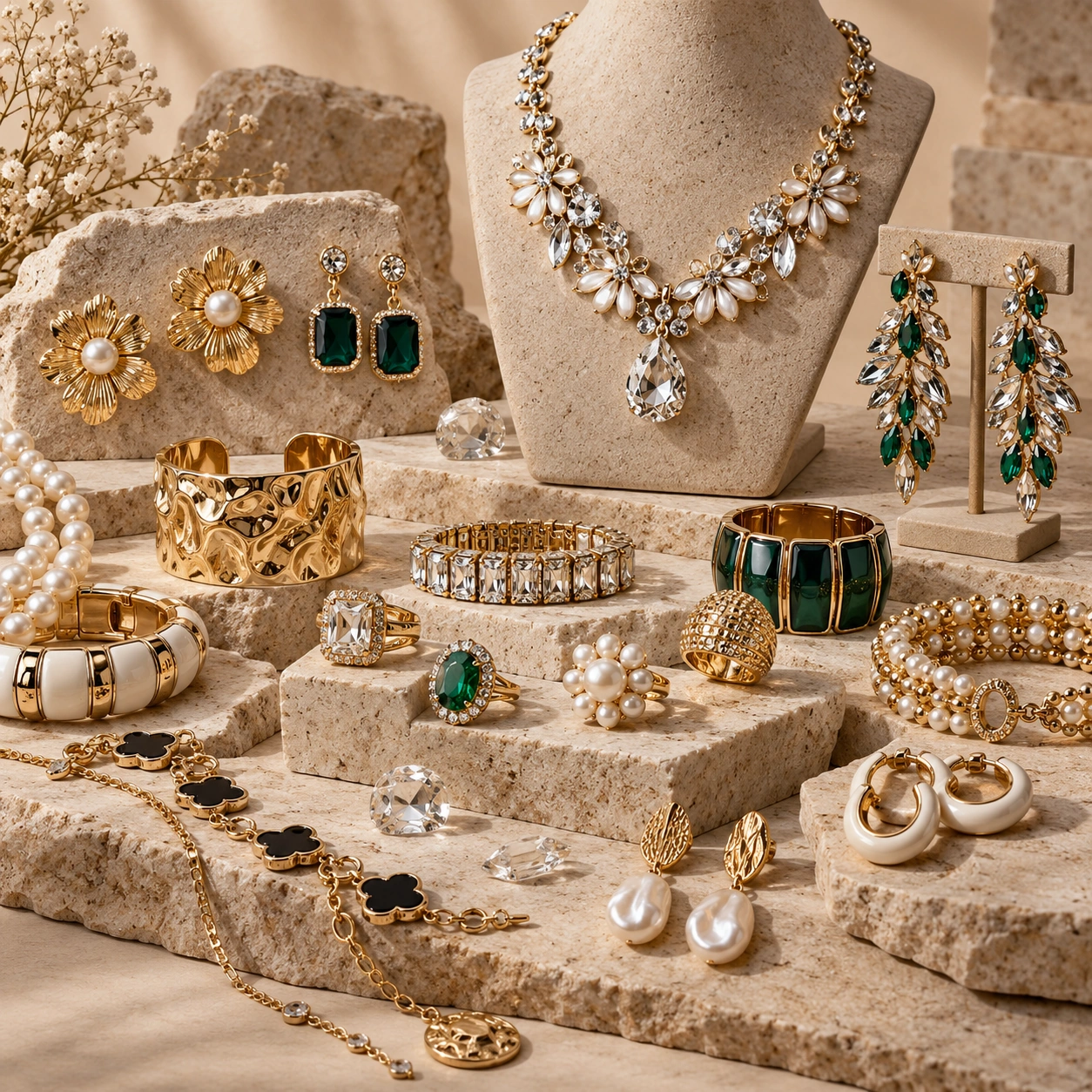
MANUFACTURING FOCUS
Custom Fashion & Costume Jewelry Manufacturing
Brands searching for custom costume jewelry manufacturers are usually looking for more than a supplier that can simply reproduce a shape. Materials, plating, decorative components, construction, order quantity and finish consistency all affect whether a design can be produced successfully at commercial scale.
Fashion and costume jewelry often use flexible combinations of metals, stones, crystals, pearls, enamel and decorative components. For professional buyers, the important question is not whether a product is described as “fashion jewelry” or “costume jewelry.” What matters is whether the design, materials, finish, quantity and quality expectations are clearly specified before sampling and bulk production.
Decorative, design-led jewelry
Often uses base metals, plated surfaces, crystals, glass stones, synthetic pearls, enamel and other decorative components.
A broader commercial category
Can include costume jewelry as well as brass, stainless steel and other material combinations used for branded retail collections.
For manufacturing purposes, the specification matters more than the label. Buyers should define materials, dimensions, finish, decorative components, quantity and packaging requirements before quotation and sampling.
COLLECTION DEVELOPMENT
Jewelry Categories We Can Develop
Custom costume and fashion jewelry can cover different product categories within the same branded collection. Exact production options depend on the design and specification of each project.
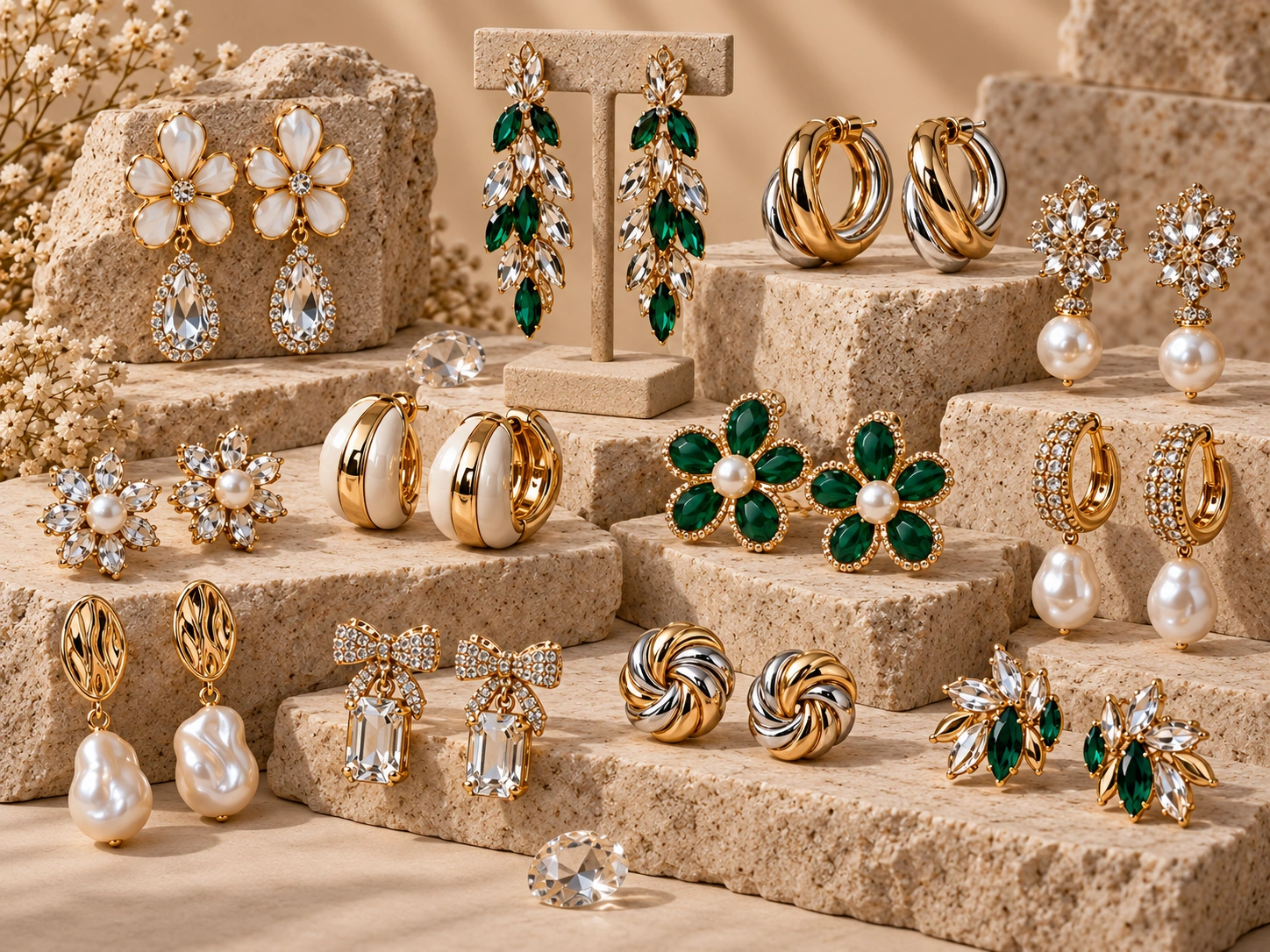
Earrings
Studs, hoops, drops and decorative statement earrings with different finishes and components.
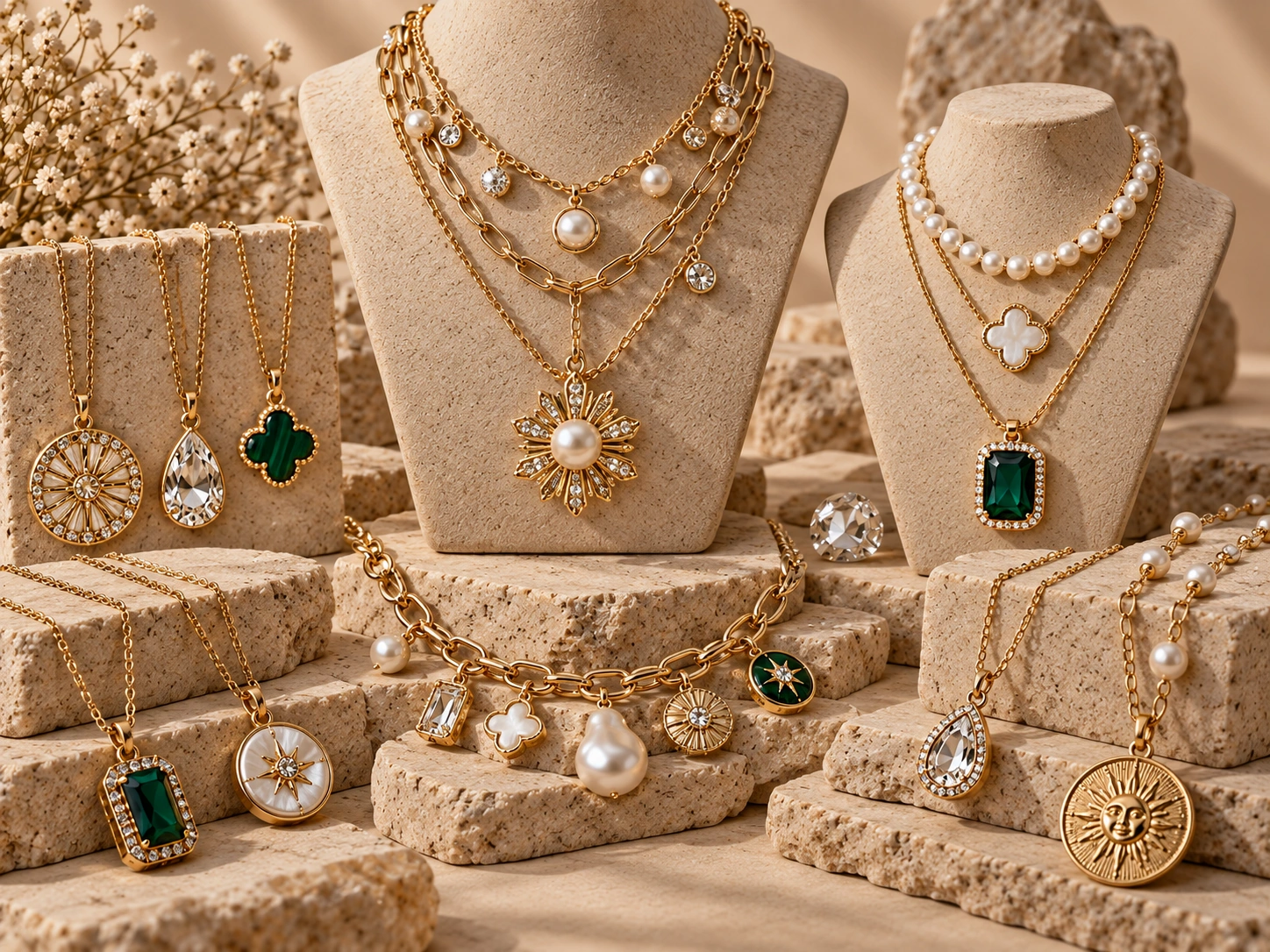
Necklaces & Pendants
From simple pendants to layered designs, decorative chains and collection pieces.
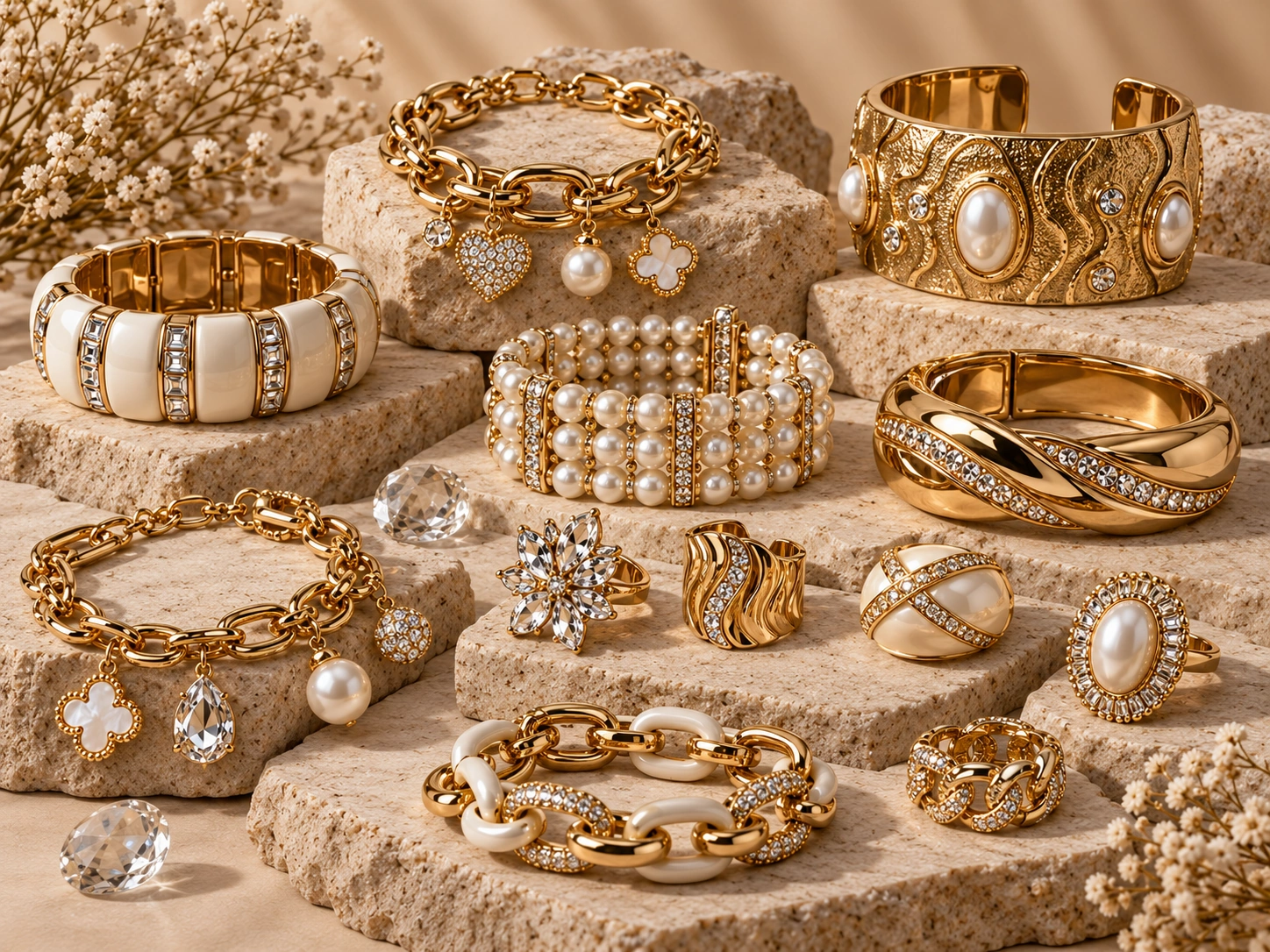
Bracelets, Rings & Sets
Bracelets, bangles, rings, charms and coordinated sets developed around a shared design direction.
MATERIAL SELECTION
Materials for Custom Costume Jewelry
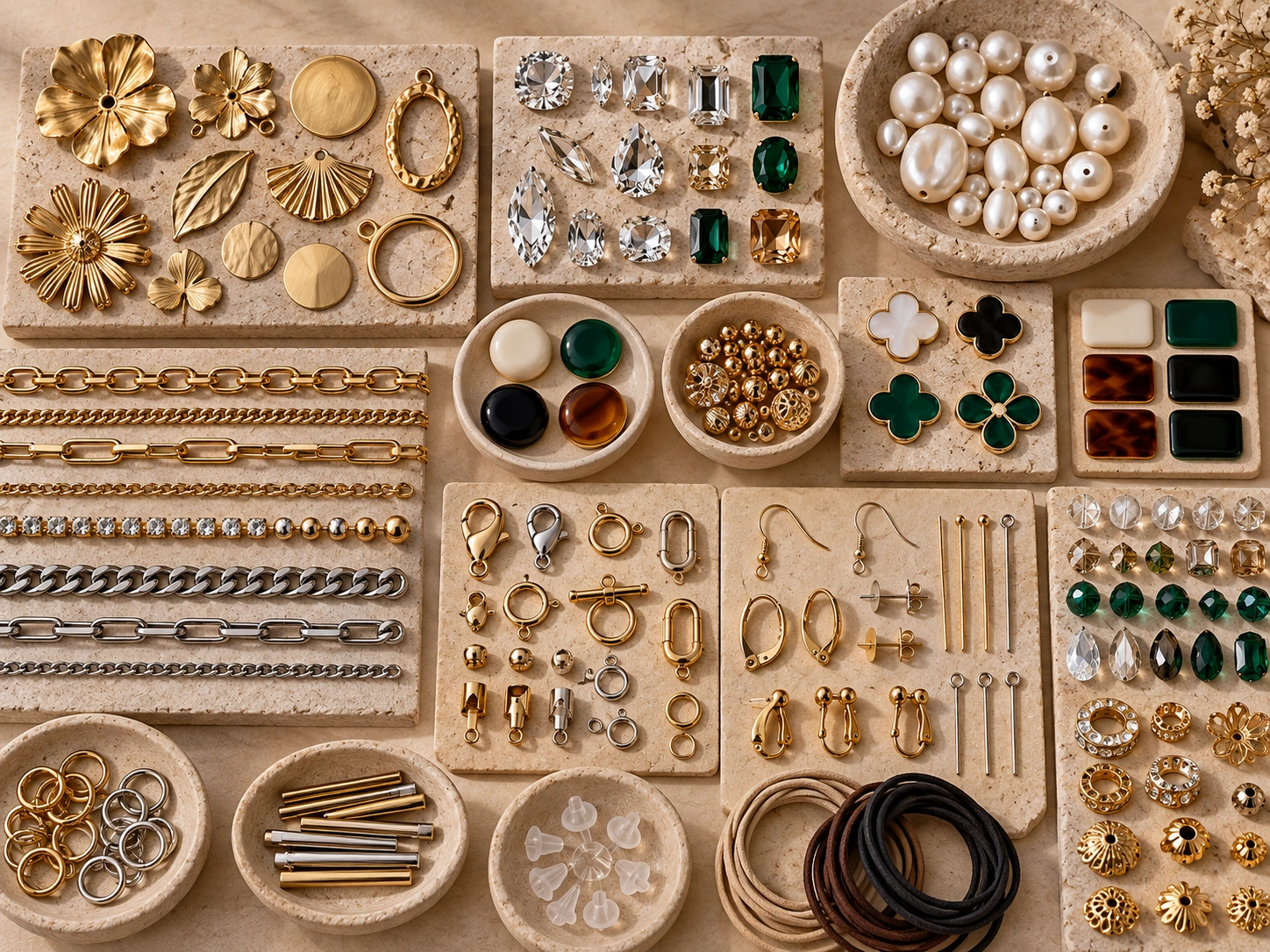
Material selection affects appearance, weight, cost, finish options and manufacturing method. Common materials and components may include:
Flexible for shapes, finishes and plating.
Suitable for selected constructions and finishes.
Chosen according to shape, process and target specification.
Selected by setting method, color and design.
For earrings, necklaces and statement pieces.
For color, patterns and decorative details.
Material suitability should be confirmed against the final design rather than assumed from the category alone.
SURFACE & COLOR
Plating, Colors & Surface Finishes
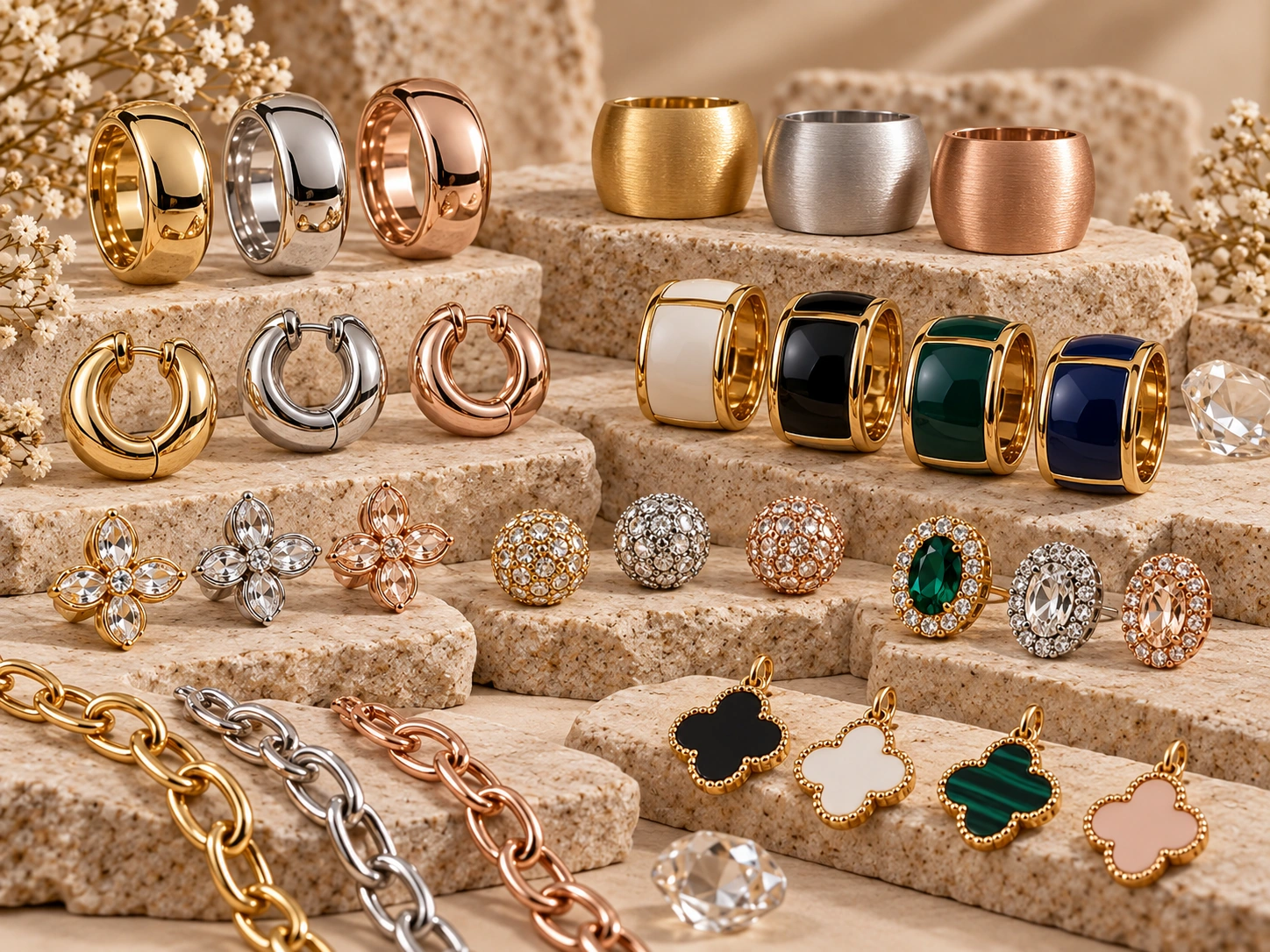
Surface treatment is a major part of fashion and costume jewelry development because the same design can look very different depending on plating, polish, texture and decorative color.
- Gold-tone, silver-tone and rose-gold-tone finishes
- Polished, matte, brushed and antique-style surfaces
- Enamel color development
- Crystal, stone and decorative component colors
- Project-specific plating thickness requirements
A visual reference is useful, but a sample or agreed specification creates a clearer production reference than phrases such as “same gold” or “vintage finish.”
FROM IDEA TO PRODUCTION
How Can a Brand Develop Its Own Custom Fashion Jewelry?
A project does not need to begin with a complete technical file. Brands may start with a sketch, reference image, existing sample, design concept or basic product brief.
Reference or Design Brief
Share product type, direction, approximate size and available visual references.
Design Review
Review material, construction, decorative components and production requirements.
Material & Finish Selection
Define metal, plating, stones, enamel, pearls, findings and relevant details.
Sample Development
Produce a sample against the agreed direction for product review.
Sample Approval
Check shape, dimensions, finish, components, logo and assembly.
Bulk Production
Move into production according to the confirmed quantity and approved specification.
CUSTOMIZATION
What Can Be Customized?
The level of customization depends on the product, material, construction and quantity.
- Shape and dimensions
- Metal material and surface finish
- Plating and enamel colors
- Crystal, stone, pearl and decorative components
- Chains and findings
- Logo or engraving
- Packaging and collection coordination
Available options depend on the design, material and order requirements.
MOQ
What Affects MOQ?
There is no single MOQ that applies to every fashion or costume jewelry project. Minimum order quantity can vary according to:
- Product category and material
- Production method and tooling requirements
- Plating, finish and number of colorways
- Stones and decorative components
- Units required per style
- Packaging and customization depth
MOQ should be confirmed against a specific product specification. A low total order quantity does not automatically mean every style can be produced in very small quantities.
SAMPLE APPROVAL
Sampling Before Bulk Production
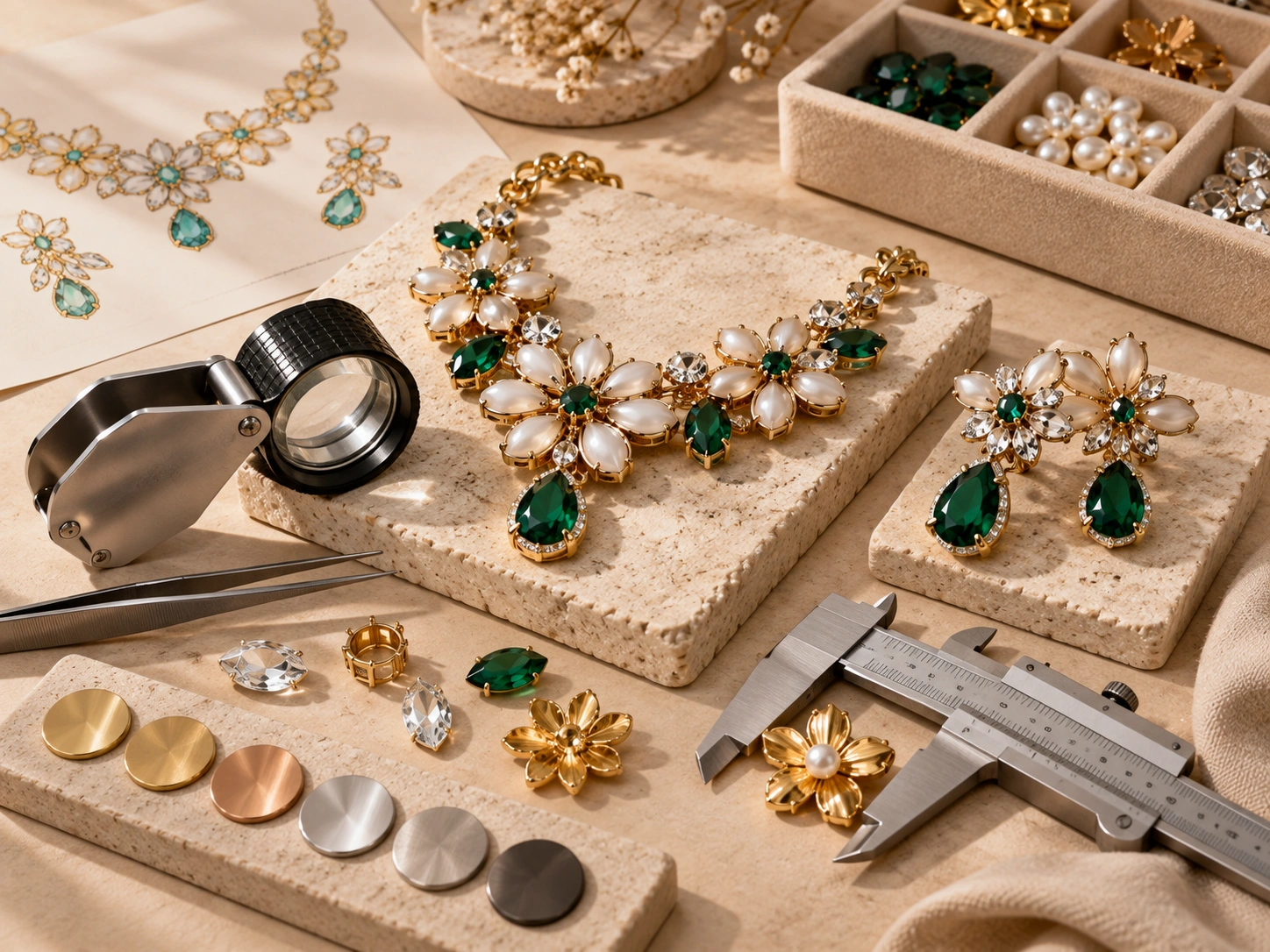
Sampling is one of the most important stages in custom fashion jewelry production. Before a larger order is produced, a sample can help verify:
- Overall shape, dimensions and proportion
- Surface finish and plating color
- Stone, crystal or enamel appearance
- Logo placement and assembly
- Visible workmanship and packaging compatibility
Bulk production should follow an approved sample or agreed specification wherever possible.
BULK CONSISTENCY
Quality & Consistency in Bulk Production
For branded jewelry collections, consistency is often as important as the appearance of an individual sample. A bulk order can be reviewed against agreed product details before packing.
Materials & Components
Confirm selected materials and decorative components against the approved specification.
Dimensions & Construction
Check important dimensions, connections and assembly details where relevant.
Finish & Color
Compare plating, polishing, enamel and decorative colors with the agreed reference.
Stones & Details
Inspect placement, appearance and visible setting issues where relevant.
Surface Condition
Review visible scratches, marks and irregular finish before packing.
Packing Requirements
Confirm quantities, product separation and agreed packaging requirements.
No manufacturing process should be described as completely defect-free. The practical goal is to define the specification clearly and check production against that agreed reference.
SUPPLIER SELECTION
How to Choose a Custom Costume Jewelry Manufacturer
Choosing a manufacturer should involve more than comparing the lowest quoted unit price. Before ordering, professional buyers should clarify the areas below.
BRANDED COLLECTIONS
Private Label & Branded Jewelry Collections
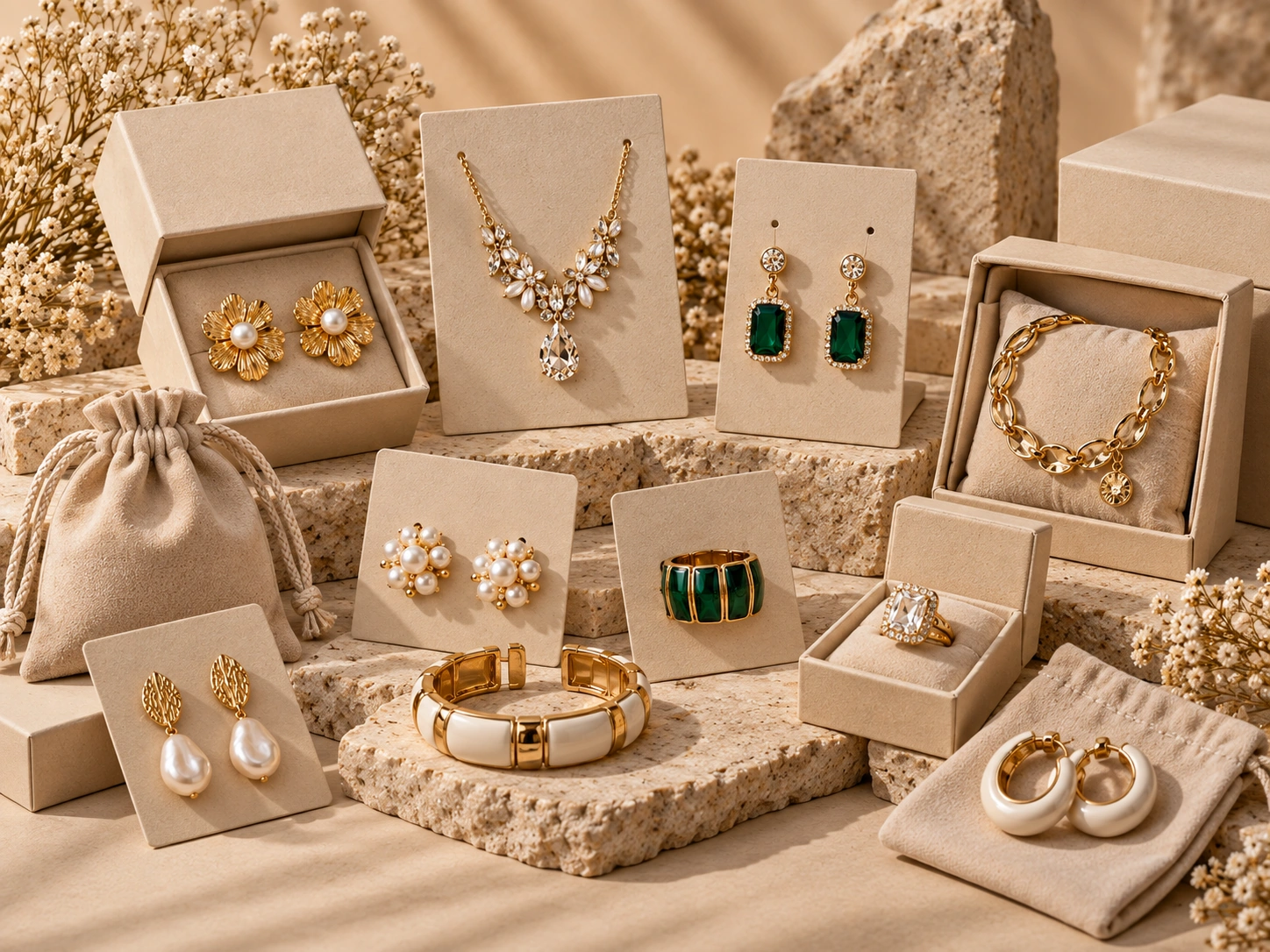
Custom costume jewelry can form part of a wider private-label program. Depending on the project, branding requirements may involve:
- Logo placement or engraving
- Jewelry display cards
- Pouches and boxes
- Labels and collection packaging
Not every branding option applies to every jewelry style or order quantity, so availability should be confirmed during quotation and sampling.
SERVICE BOUNDARY
When Do You Need Full Custom Jewelry Manufacturing?
If you already have an existing design direction and mainly need changes to colors, finishes, components, logos or packaging, a fashion jewelry customization workflow may be sufficient.
A full custom manufacturing process becomes more appropriate when the project involves a completely original structure, detailed CAD development, molds or tooling, complex engineering, multiple prototype revisions or full OEM/ODM development.
PROJECT WORKFLOW
A Practical Custom Costume Jewelry Production Process
A clear workflow helps reduce misunderstanding between design approval and bulk production.
Send Requirements
Share the product type, reference image, sketch or design direction.
Confirm Specifications
Define material, size, finish, components, quantity and branding requirements.
Review Quotation
Pricing and MOQ are evaluated against the confirmed specification.
Develop Sample
A sample is prepared according to the agreed requirements.
Review & Approve
Check product appearance, dimensions, finish, components and branding.
Confirm Production
The approved sample or specification becomes the production reference.
Quality Review
Finished products are checked against agreed requirements before packing.
Packing & Shipping
Packaging and shipping are coordinated according to the confirmed order.
FAQ
Custom Costume Jewelry Manufacturing FAQs
What is the difference between fashion jewelry and costume jewelry?
The two terms often overlap. Costume jewelry generally describes decorative jewelry made with alternatives to traditional fine-jewelry materials, while fashion jewelry is a broader commercial category that can include costume jewelry and other branded accessories. For manufacturing, material and product specifications are more important than the label itself.
What materials are commonly used for custom costume jewelry?
Depending on the design, materials may include brass, stainless steel, suitable metal alloys, crystals, glass stones, cubic zirconia, synthetic pearls, enamel and other decorative components. The final material should be selected according to the design and production requirements.
Can I customize an existing fashion jewelry design?
Potentially. Some projects can begin with an existing style and modify elements such as finish, color, decorative components, logo or packaging. The available changes depend on product structure, material and order requirements.
What affects MOQ for custom costume jewelry?
MOQ can be affected by product type, material, tooling, finish, color variations, stones, components, units per style, packaging and the level of customization. It should be confirmed against the specific project rather than assumed from a general product category.
Can I request a sample before bulk production?
Sampling can be used to review important details before bulk production, including shape, dimensions, finish, colors, stones, logo placement and assembly. Sampling requirements depend on the individual project.
Can logos, colors and finishes be customized?
Depending on the design and production method, projects may support changes to logo, engraving, plating color, enamel, stones, decorative components and packaging. Exact options should be confirmed during project review.
How do manufacturers maintain consistency in bulk costume jewelry production?
Consistency starts with clearly defined specifications and an approved reference. Production can then be reviewed for material, dimensions, finish, color, decorative components, assembly and visible workmanship before packing.
What information should I provide to request a quotation?
Provide as much of the following as available:
- Product type
- Reference image or sketch
- Approximate dimensions
- Preferred material
- Plating or finish
- Stone or decorative requirements
- Estimated quantity per style
- Logo requirements
- Packaging requirements
- Destination market
- Required timeline
If some specifications are not yet decided, provide the information you already have and identify which areas still need discussion.
START YOUR PROJECT
Develop Your Custom Fashion Jewelry Collection
A successful costume jewelry project starts with a clear specification. Send your design, reference image or sourcing brief together with your estimated quantity and target requirements.