Custom Jewelry Plating & Surface Finishing for Brands
PLATING & FINISH DEVELOPMENT | OEM / ODM PRODUCTION
The right finish should work on the actual jewelry—not just look good in a reference photo. HaoLustra supports custom jewelry plating and surface finishing within OEM, ODM and private-label manufacturing programs for jewelry brands, wholesalers, retailers and sourcing teams. From our factory in Qingdao, China, we review your base material, color direction, surface texture and sample requirements before confirming a practical production route.
Whether you are developing warm gold-tone earrings, a brushed bracelet or several styles that should look consistent as one collection, start with your design and finish references. We will review the relevant materials, available treatment options and approval requirements for your project. Specific coating methods, technical targets, quantities and testing arrangements are confirmed case by case.
For new jewelry production and collection development—not consumer repair or single-piece replating.
Discuss Your Finish Requirements · View Our Qingdao Factory
Project-first support: Material & finish review · Sample approval · Multi-style color coordination · Quality checks against confirmed requirements
Plating and Surface Finishing: Two Different Decisions
Jewelry electroplating is a process that deposits a metallic layer on a suitable base. Surface finishing describes how the jewelry surface is prepared or given its final appearance, which may involve polishing, brushing, satin or matte treatments. A product can need both a specific surface texture and a suitable plating or coating route.
This distinction matters when a brand sends an instruction such as “rose gold with a soft matte finish.” That request describes an appearance, but it may not identify the base metal, actual deposited material, relevant surfaces or approval standard. A production-ready specification makes those decisions explicit.
| Buyer term | What it describes | What to confirm |
|---|---|---|
| Gold-tone / rose-gold-tone / silver-tone | A visual color direction | Reference shade, material and proposed actual coating or finish |
| Electroplated | A metallic coating process | Base metal, deposited material, treated areas and any required thickness or verification |
| Polished | A reflective surface appearance | Which surfaces, level of shine, edges and detailed areas |
| Brushed | A directional texture | Grain direction, intensity, placement and transitions |
| Satin / matte | A lower-gloss appearance | Sheen, texture, color reference and surfaces to be treated |
| Two-tone / dark finish | A combination of different appearances | Separation lines, difficult-to-reach areas and component matching |
The terms in the table are specification examples, not a blanket promise that every combination is available for every substrate, shape or order quantity.
Choose a Finish That Fits Your Jewelry Material
The same color reference can produce different visual results on different products. A buyer should define the substrate and construction before selecting a coating route or approving a sample.
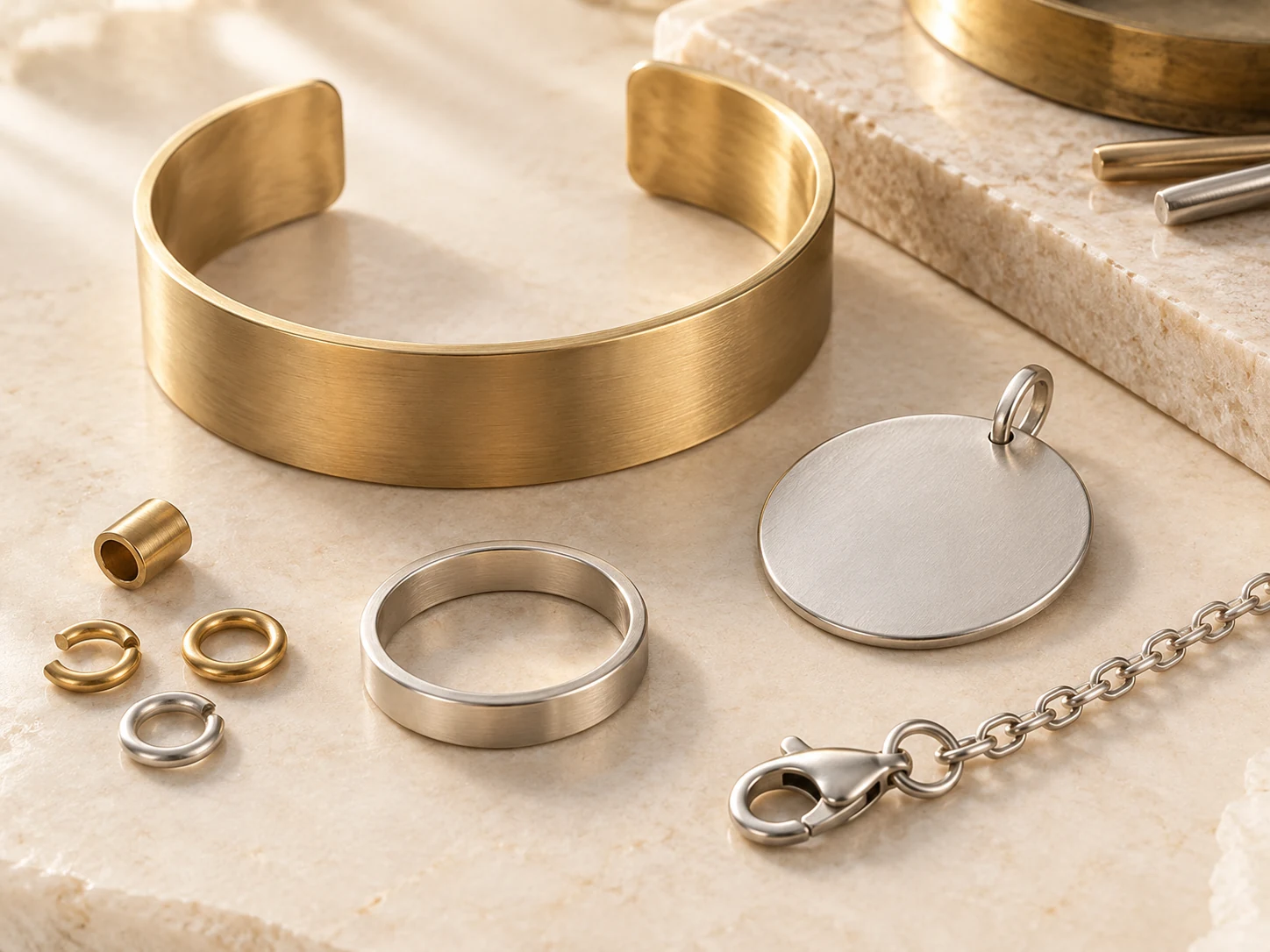
Brass jewelry
Brass is used in many fashion-jewelry designs. Its final appearance can depend on preparation, product shape and the agreed decorative finish. If your project includes small recesses, openwork details or components that receive regular handling, flag these during review instead of assuming the same treatment will look identical everywhere. For design and production questions specific to this metal, see custom brass jewelry manufacturing.
Stainless steel jewelry
Stainless steel may be specified for polished, brushed or coated looks, but the grade, product geometry and intended coating method still need confirmation. PVD is a coating technology, not the default specification for every stainless steel style. If you need PVD or a particular material grade, say so in your inquiry and ask which production route is feasible. Our custom stainless steel jewelry manufacturing page covers material-specific sourcing and development.
Copper, zinc alloy and mixed-component designs
Different alloys and assembled components can require a different preparation or finish review. If a product has a pendant, chain, clasp and decorative findings sourced or manufactured separately, include those pieces in the review. A visually similar metal color does not prove that the underlying components or coatings have the same specification.
Practical starting point: Tell us what material you know, what appearance you want and which parts must match. If you do not yet know the base metal, that is a question to resolve before the final production brief is approved.
Finish Options for a Custom Jewelry Collection
The goal is not to choose from a long list of decorative names; it is to make the finished product easy to understand and approve.
Color directions
A collection may call for gold-tone, silver-tone, rose-gold-tone, black or two-tone appearance. Establish the target with a physical reference where possible, particularly if items will be worn or photographed together. Agree on which components need the closest match and which variations are acceptable before manufacturing proceeds.
Texture and reflection
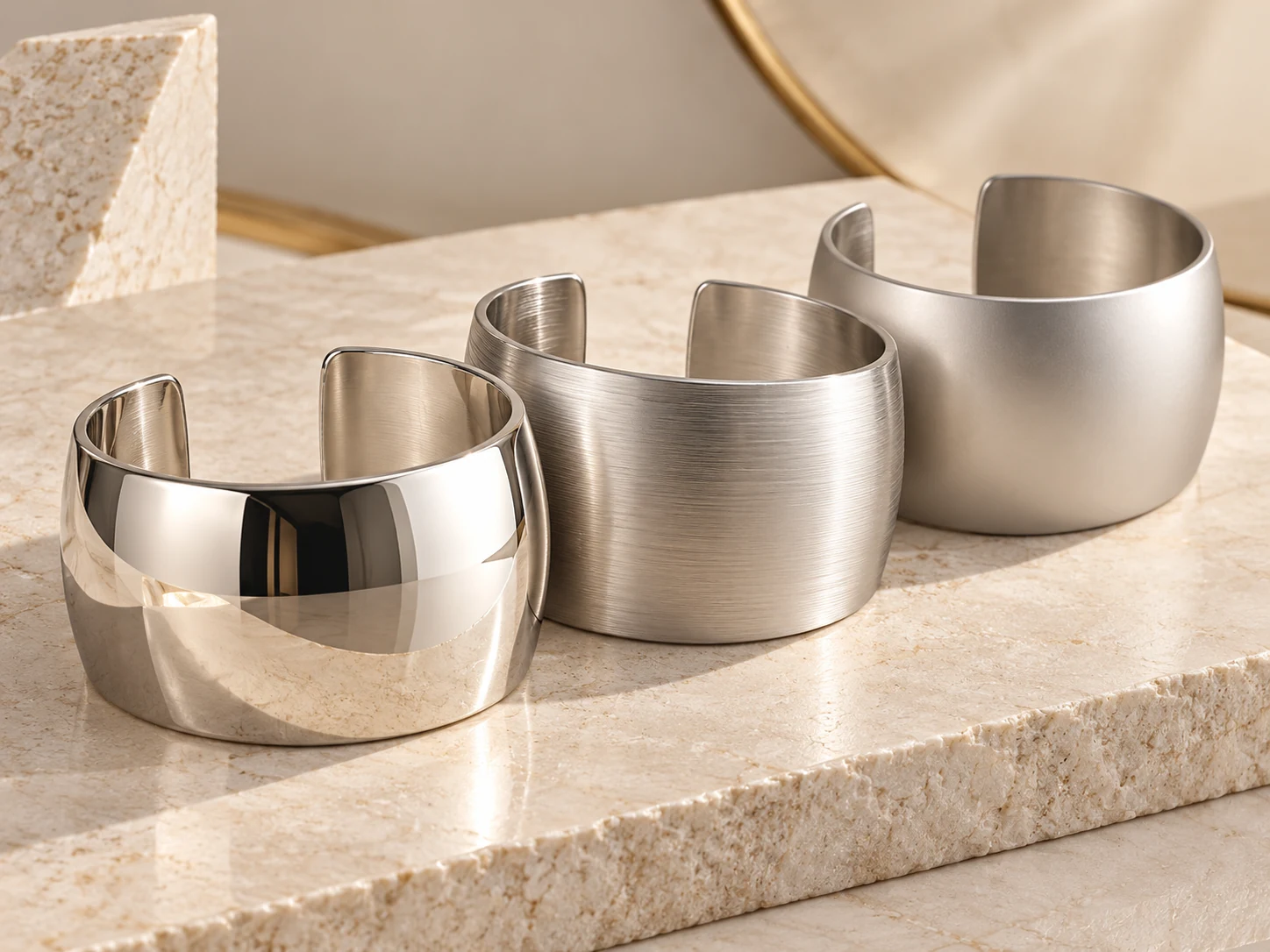
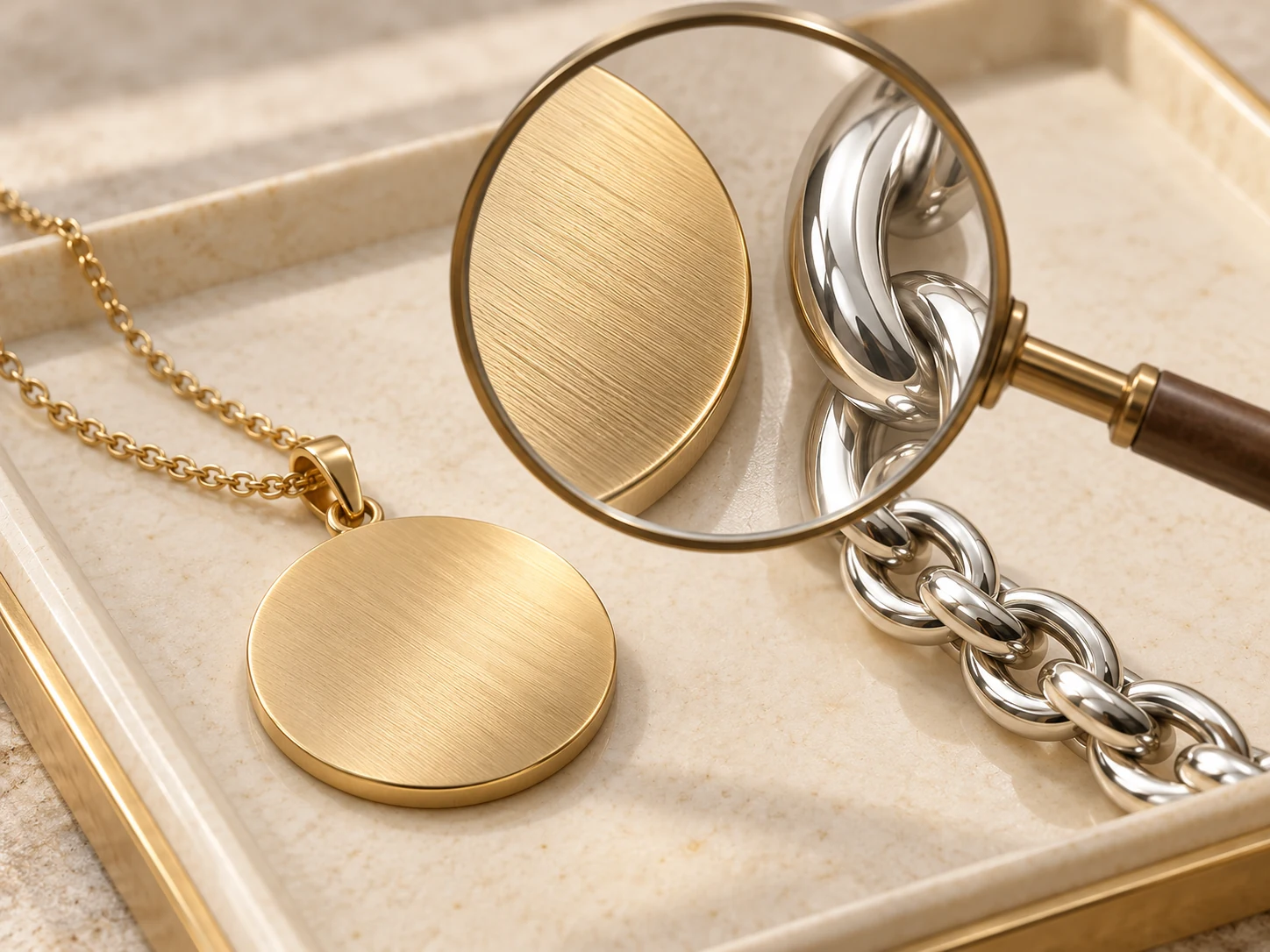
For polished finishes, check the reflections on broad faces and the visibility of marks near edges, joins or decorative details. For brushed finishes, note the direction of the grain and where it starts and stops. For matte or satin finishes, approve the degree of sheen on the actual jewelry rather than relying on a verbal description alone.
Combined finishes
A ring with a polished edge and brushed face, or a pendant with contrasting surfaces, needs a marked drawing or sample that shows where each appearance belongs. Fine details, narrow corners and contact areas deserve special attention during feasibility review.
Important: A gold-like appearance is not proof of gold content. Terms such as “gold plated,” “gold electroplated” and “vermeil” concern actual product composition and labeling; buyers should confirm the underlying product facts before using such descriptions in the target market. A color name alone cannot establish that claim.
Electroplating, PVD and Mechanical Finishing: How to Choose a Route
Start with the material and the result you need, then review the process. Electroplating, PVD and mechanical finishing are not interchangeable labels. They describe different approaches, and their suitability depends on the piece, production method, finish objective and required evidence.
- Electroplating: If the project calls for a specified deposited metal or coating thickness, ask whether the combination and measurement requirements can be supported for the chosen product.
- PVD or another coating system: If the buyer has specified PVD, confirm it as a project requirement. The route, substrate compatibility and any supporting performance evidence must be reviewed before a quotation or claim is agreed.
- Mechanical finishing: For polished, brushed, satin or matte looks, prioritize actual texture, reflectivity, treated areas and sample approval. These words do not, by themselves, indicate the presence of a precious-metal coating.
A PVD label does not automatically prove that jewelry is waterproof, hypoallergenic, nickel-free or permanently resistant to fading. Those statements require evidence relevant to the material, construction, coating, intended use and market. HaoLustra does not make those unconditional promises on this page.
What to Approve Before Bulk Jewelry Plating
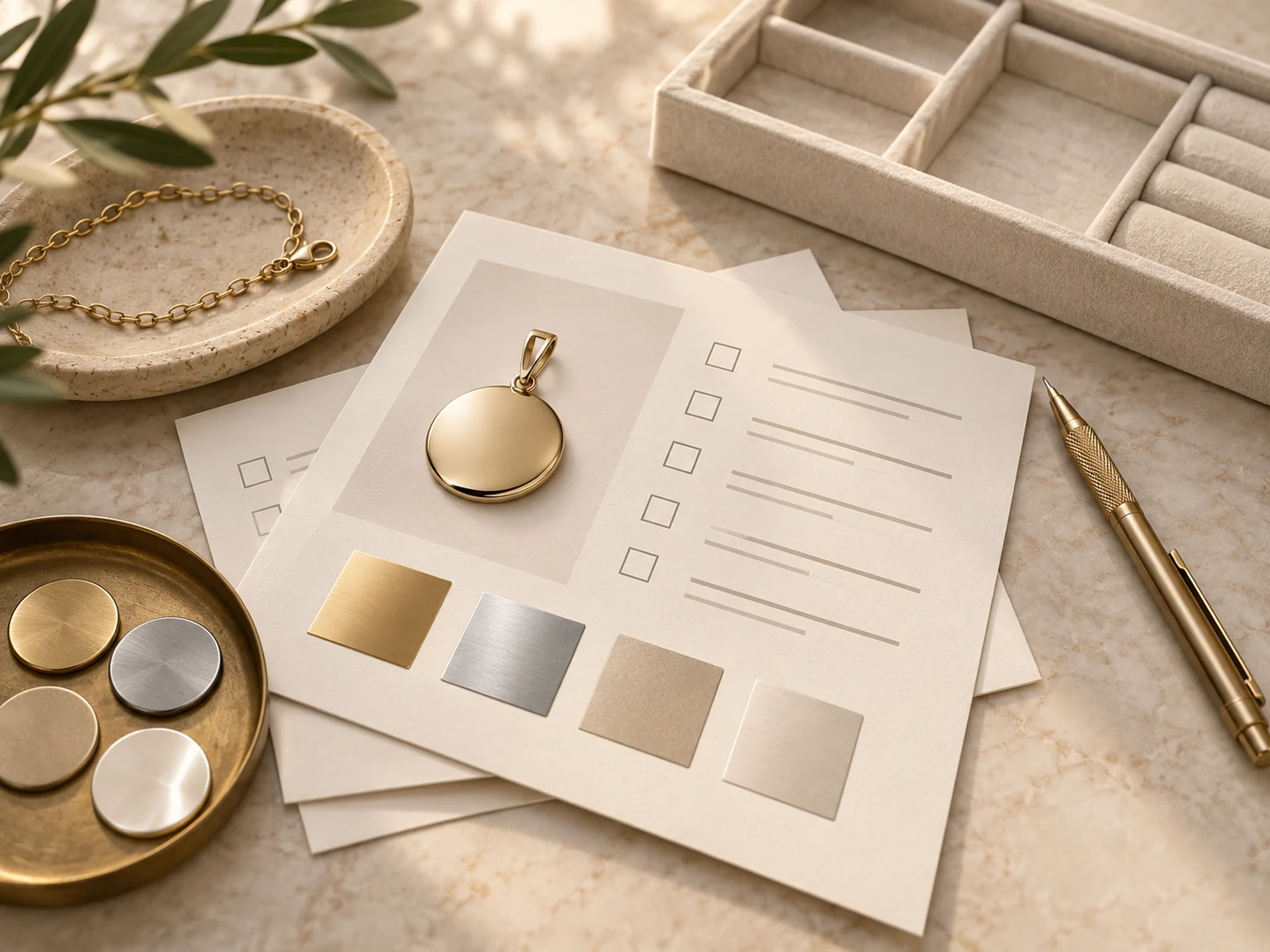
A strong finish specification reduces decisions left to interpretation after sampling. The practical approval checklist should cover not only the desired color, but also the physical product and its relevant components.
Finish approval checklist
- Style and revision: Product name/SKU, drawing or reference, sample version and target dimensions.
- Base material: Confirmed metal or a clearly stated request for alternative-material evaluation.
- Color reference: The agreed sample or reference tone; record how it was reviewed.
- Texture and treatment areas: Polished, brushed, satin, matte or other finish; mark the surfaces, grain direction and boundaries.
- Matching components: Chain, clasp, earring back, charm, connector or other parts that must be checked together.
- Production requirement: Estimated quantity per style and finish; number of colorways and any separate SKU requirements.
- Performance or compliance brief: A specified coating material, thickness, intended-use requirement, test method or documentation request where needed.
- Approval record: Which physical sample, photos and written details form the reference for production—and who approves a change.
A digital render or reference photo is useful for communicating intent, but lighting and display settings can alter the appearance of metal colors. For critical finishes, a physical reference or clearly agreed comparison standard is more reliable. For upstream CAD development and physical prototype work, visit jewelry prototyping and sample development.
How HaoLustra Moves a Finish from Brief to Production
Finishing is considered as part of a larger custom manufacturing order. Instead of a generic promise that every finish is available, we review the design and define what must be confirmed at each stage.
01 / Product and material review Send the design, base-material preference, quantity and finish reference. We identify questions about components, geometry, coating method and required outcomes.
02 / Finish specification Clarify color, texture, treated surfaces and any particular process, labeling or test request. Confirm which parts of the proposal are feasible and which need further investigation.
03 / Sample and comparison Review a physical sample or other agreed reference as applicable. Look at the assembled piece, surface detail and color match with related components, not only a single isolated part.
04 / Approval and change control Record the accepted sample/version and written specifications. Changes to materials, components, color references or finish requirements should be reviewed before the bulk-production reference is updated.
05 / Bulk manufacturing and checks Use the confirmed requirements to guide production and agreed appearance checks. Any requested inspection method, evidence or reporting must be reviewed for the actual order. See the separate jewelry quality control page for broader inspection and pre-shipment procedures.
Sampling fees, technical feasibility, production times and finish-specific requirements depend on the project and are confirmed during quotation—not assumed from a different style.
Keeping Color Consistent Across Components, SKUs and Reorders
A necklace pendant may be produced differently from its chain; an earring can include a post, back, charm and visible connector. Even when these components are described using the same color name, their finished appearance may differ.
For a coordinated launch: List the pieces that will appear together, identify the surfaces that must look alike, and submit a reference sample. Compare the assembled necklace or earring against that reference under an agreed viewing condition. If multiple gold-tone shades are acceptable, define their intended use rather than calling all of them the same color.
For repeat orders: Identify the previously approved product version and finish reference. Reconfirm components, current material availability, production route and any requested changes before placing a repeat run. Use the agreed reference when checking the new production.
These steps aim to reduce avoidable differences. They are not a guarantee of perfectly identical color across different materials, lighting conditions or production batches.
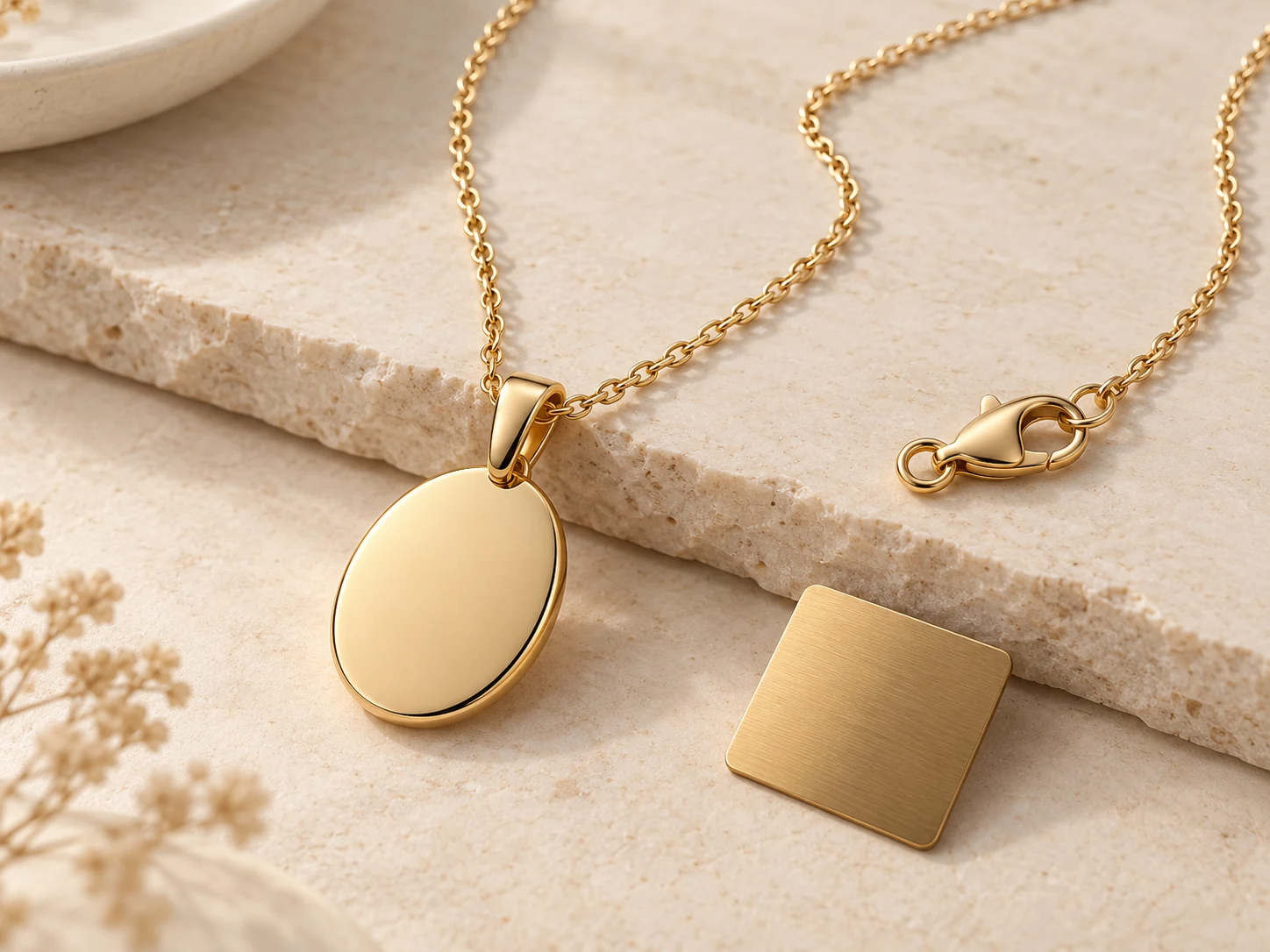
Example specification (illustrative, not a HaoLustra customer case): “The pendant face and chain should match the approved warm gold-tone reference when assembled. The clasp is less visible but should remain within the agreed appearance tolerance. All three components should be compared during sample approval.”
What Should You Ask About Plating Thickness, Durability and Testing?
A photograph can show the color and finish of a sample, but it cannot establish the composition or thickness of a coating. Likewise, a process name does not establish how a product will perform under friction, water exposure, perspiration or storage conditions.
If your purchase specification requires measurable performance, submit the actual criterion, not only a marketing phrase. This may include a target coating thickness, a defined wear or corrosion test, material composition, nickel-release requirements or market-specific documentation. Ask whether the proposed production route, measurement method and records can be provided for the exact project.
For visual approval, review marks, uneven appearance, edges, recesses and component consistency against the agreed sample. For measurable properties, discuss the test method and what evidence would be needed. No fixed micron thickness, test result, certification, warranty or universal color-retention claim is promised here.
MOQ, Samples and Quotation: What Changes the Cost?
A finishing quotation should be tied to the product specification, not just a color name. Requirements can vary with the material, product shape, coating/finishing route, component count, number of colorways, quantity per style, sampling and any requested verification.
HaoLustra commonly reviews selected custom jewelry projects around a 50-piece-per-style working reference, but this is not a fixed minimum for every plating or surface-finishing requirement. A color variation, earring pair, matched set or specialized process may require a different quantity definition or production arrangement. The quotation should state exactly which unit and specifications apply.
To make a quotation useful, specify:
- Quantity by style, finish and SKU, rather than only the total collection quantity.
- Whether the order includes separate parts that should visually match.
- The finish reference and the number of sample versions likely needed.
- Any required coating method, measurement or product-labeling documents.
- Branding, packaging and launch timing that influence the full project scope.
If minimum quantities are your primary sourcing concern, see low-MOQ jewelry manufacturing. If the work is part of a coordinated necklace-and-earring collection, clarify whether quantities are counted as pieces, pairs or complete sets.
Jewelry Finishing at Our Qingdao Factory
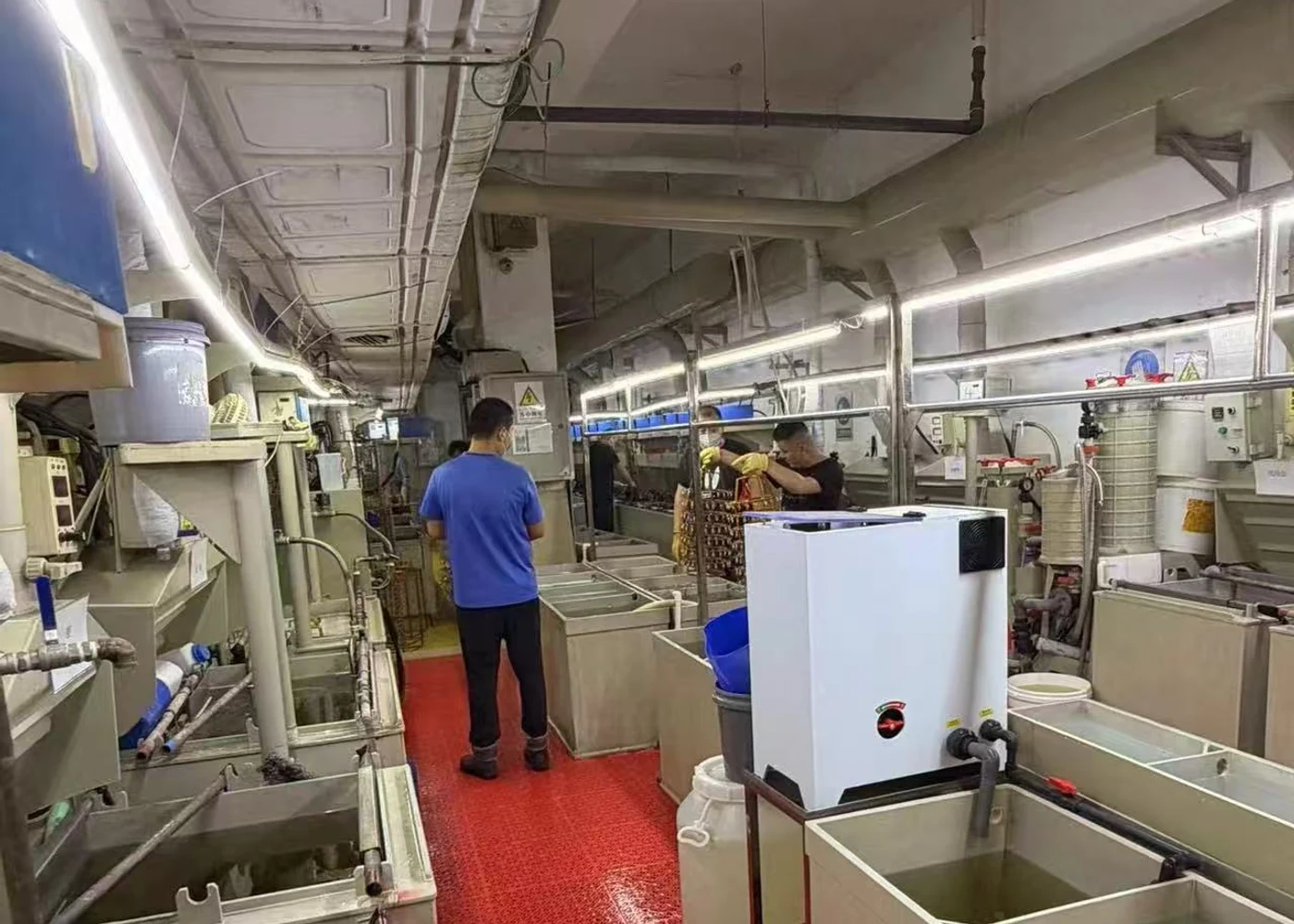
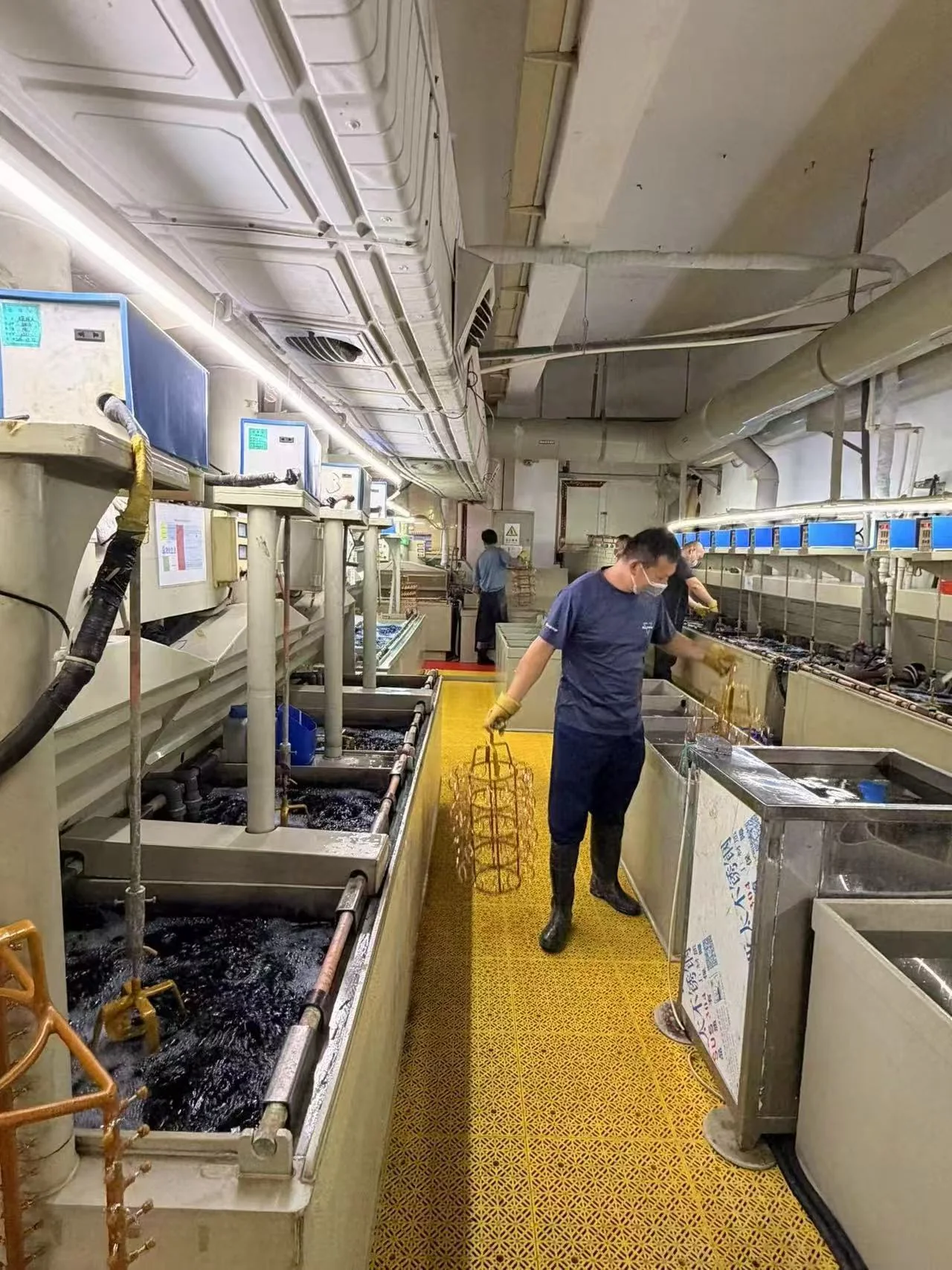
HaoLustra operates a jewelry factory in Qingdao, China and supports custom fashion-jewelry production, OEM/ODM development, sample review, plating and surface finishing, inspection and private-label order coordination for professional buyers. Our existing factory documentation identifies plating and finishing activities in the Qingdao production environment.
A credible manufacturing proposal still starts with the individual product. Not every coating method, material combination, specialist process, test or component can be assumed to be available in-house. Where specialized inputs or steps are required, feasibility and any necessary sourcing or coordination are reviewed against the project.
For the wider production environment and its documented scope, visit our Qingdao jewelry factory. For full jewelry development beyond the surface specification, see custom jewelry manufacturing.
Frequently Asked Questions
Is jewelry electroplating the same as a brushed or matte finish?
No. Electroplating applies a metallic coating through an electrical process; brushed, matte and satin describe surface appearances or treatments. A piece may need more than one manufacturing step to achieve the approved result. Specify the actual material, appearance and areas to be treated.
Is gold-tone the same as gold-plated jewelry?
No. Gold-tone describes a color appearance. Gold-plated is a claim about a coating containing gold, and its accuracy depends on the product’s actual composition and applicable labeling rules. Confirm the materials and coating specification before using product-listing claims.
Can a manufacturer match the color of a chain, pendant and clasp?
A shared reference can be used to review these components together during sampling. The achievable match depends on material, shape, component sourcing and finish route, so acceptable appearance and approval conditions should be agreed for the project. A perfect match in every environment cannot be assumed.
Does PVD automatically mean jewelry is waterproof or will never fade?
No. PVD describes a coating method and does not by itself verify waterproofing, permanent color, hypoallergenic performance or any other universal claim. Discuss the intended use and the specific verification required for your product.
Can we request a particular plating thickness or test report?
You can include a target thickness, specified test method or required documentation in your inquiry. HaoLustra must review the feasibility and whether relevant testing or records can be provided for that specific material, design and production route. No default value or report is guaranteed.
Can different colorways share one minimum order quantity?
Not automatically. MOQ may be assessed by style, colorway, component or production batch. Send the proposed quantities for each option so the relevant minimum and quotation unit can be confirmed. The working reference used for some custom jewelry styles does not apply universally to every finish.
What should we approve before bulk production?
Confirm the base material, target hue, surface texture, areas to be treated, component matching, approved sample version and any performance or document requirements. Keep the accepted sample and written specifications available for production and later reorders.
Can I send a jewelry sample instead of a CAD drawing?
Yes. A reference product or clear photos can be a useful starting point for discussing the desired finish. Technical details, material compatibility and any physical sample requirements still need to be confirmed before bulk manufacturing. For the wider sample-development workflow, see jewelry prototyping.
Do you replate single consumer jewelry items?
This page is intended for business customers developing or producing new jewelry collections through OEM, ODM or private-label projects. It is not a retail jewelry-repair or one-off replating service. An existing piece may be submitted as a reference for a proposed new manufacturing project.
Send Your Design and Finish Requirements
The most useful starting point is your actual product: its material, shape, color reference, estimated quantity and any component-matching or technical requirements. You do not need to have every detail resolved, but identifying the open questions early makes sample review and quotation more productive.
HaoLustra will review the fit of your custom jewelry plating and finishing requirements within the proposed manufacturing project and discuss the next appropriate step.
Request a Project-Specific Quote · Explore Jewelry Prototyping